What a twist lock actually does
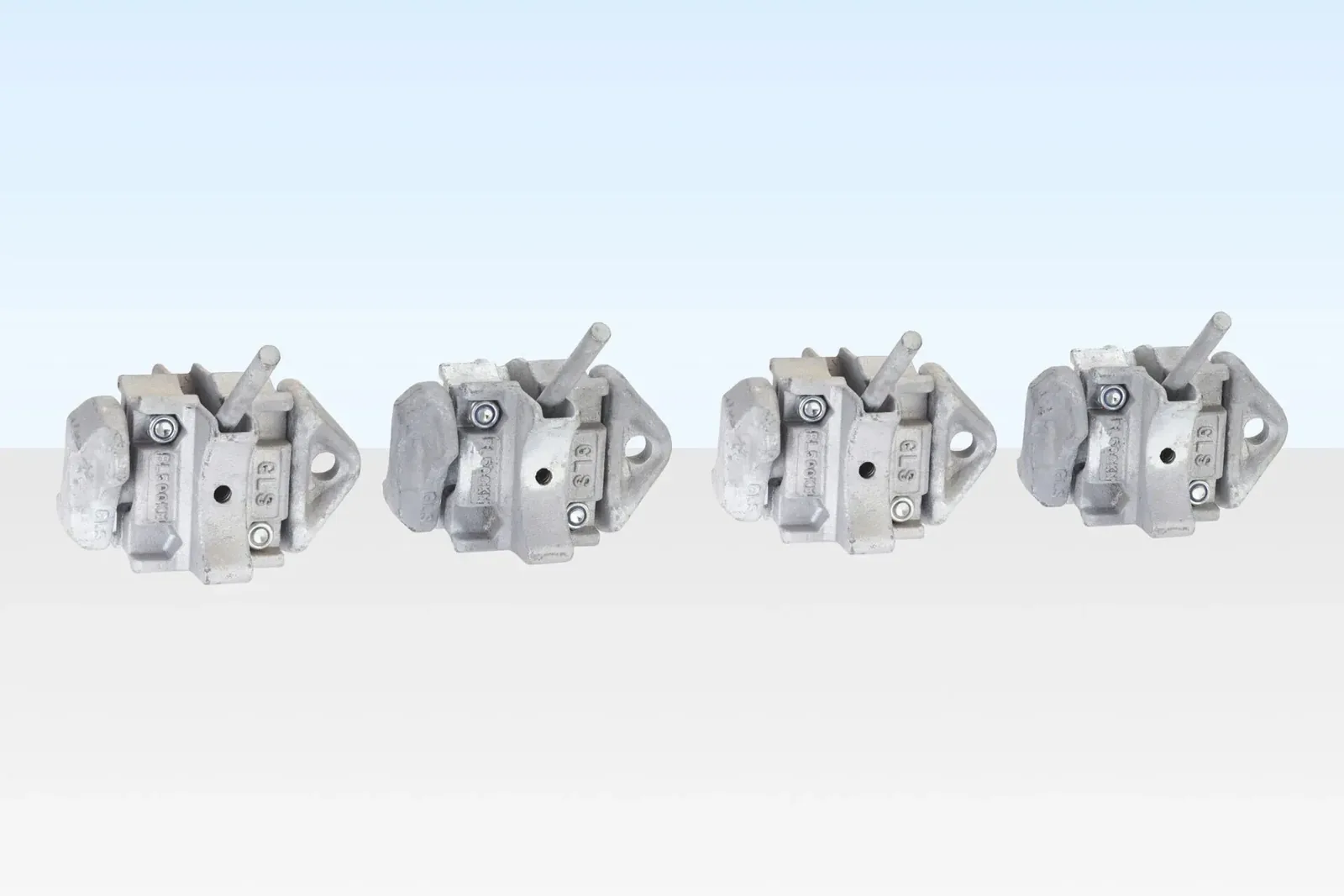
Every ISO shipping container has eight corner castings: steel blocks welded into the top and bottom corners, each with an oval hole cut in its faces. A twist lock drops its head into that oval and turns it a quarter turn. Once turned, the head is wider than the slot it came through, so the fitting cannot pull back out. Box to box, or box to chassis, the two are then joined at the corner.
That is the whole mechanism. Nothing is clamped, wedged or tensioned against the steel. The lock fills the casting's hole and rotates. Turn it back and the box lifts free.
The three parts buyers mix up
Most confusion about twist locks is a naming problem. These are different things, and only one of them is something you order.
- Corner casting — part of the container. Four top, four bottom, welded in when the box is built. You never buy them. A cracked or worn casting is a repair, not an accessory.
- Chassis and trailer locks — built into a container chassis or container trailer. The four locks on a chassis are part of the trailer and are not ordered separately.
- Loose twist lock — a stand-alone fitting, sold in sets of four, for the connections nothing else covers: box on box when you stack, or a box onto a deck that has castings but no locks of its own.
Related but different again: bridge fittings. Bridge fittings join containers standing side by side at the same level; twist locks stack them one above the other. A yard that does both needs both.
When you actually need a set
- Stacking on your own ground. One set of four per connection — the four corners between one box and the box beneath it. Two high is one connection, three high is two, and so on down the stack.
- Locking a box to a flat deck that has ISO castings but no built-in locks. If the trailer already carries its own twist locks at the corners, you don't need a loose set for it.
- Not for delivery. The tilt-bed, flatbed or step-deck that brings a container to your site arrives with its own securing gear. You don't have to buy locks to receive a box.
- Not for holding a box down to the ground. A twist lock connects container to container or container to deck. Anchoring a single box against wind is a different job, done with ground anchors or foundation brackets set into a concrete pad or a firm gravel base, and it is worth checking with your local code office before you build the pad.
What to check on the set you buy
- The cam turns freely through its full travel, by hand, with no grinding. A stiff cam is the first sign of a poor casting or a bent spindle.
- Steel and a finish that lasts. Rain is normal; salt air is not. If the yard is near the coast, look at the coating before you look at the price.
- Standard ISO castings. Nearly every container uses them, but confirm before ordering, especially on older boxes, modified units and anything that has been repaired at the corners.
- Count connections, not containers. A four-high stack of one column needs three sets, twelve locks, not four.
- Inspect them on arrival. Cams, pins, finish. Faults reported within 48 hours of delivery are repaired, replaced or refunded, with return freight paid by Ironyard.
Buying them from the lot
Twist locks sit in the container accessories category as a set of four: steel, compatible with standard ISO castings, with a quick-action cam that sets and releases by hand. The listing rates the set for stacks up to four high. Prices are on the listing; delivery is quoted to your ZIP and shown in writing on the invoice before anything is paid.
If you are still choosing boxes to go under them, the shipping containers range runs 10, 20, 40 and 45 ft in one-trip and used grades, and the buyer's guide covers how the grades differ. Stacking on uneven ground is a foundation question before it is a hardware question.