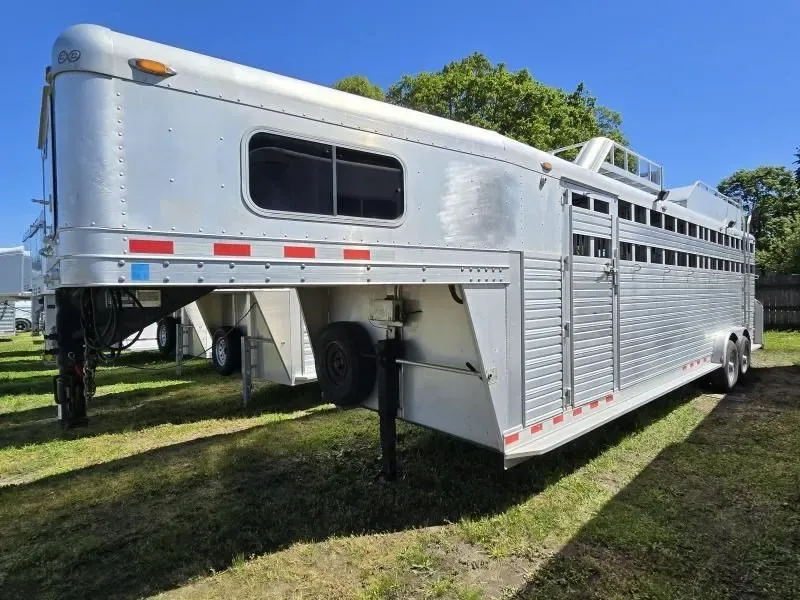
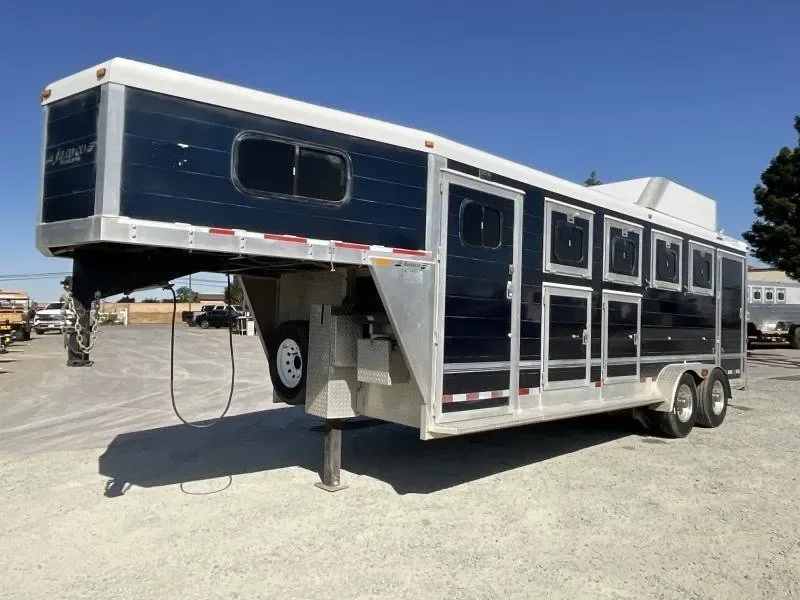
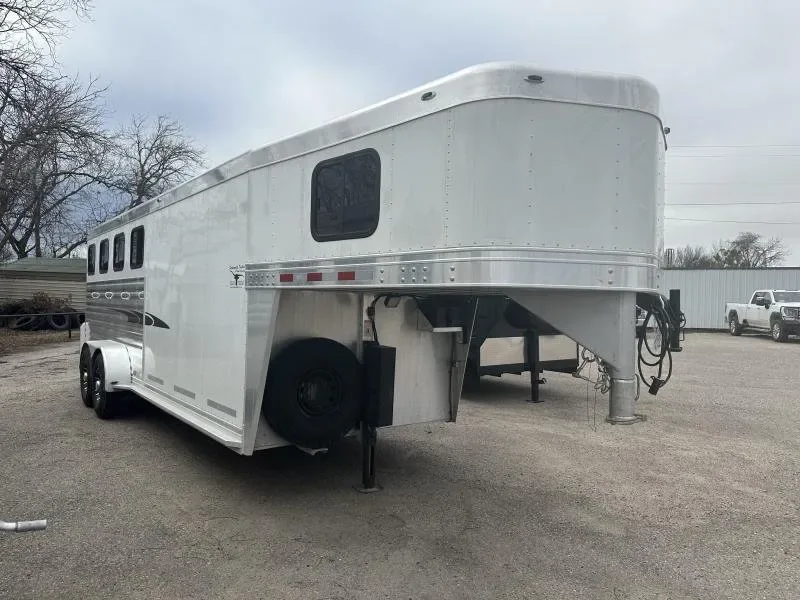
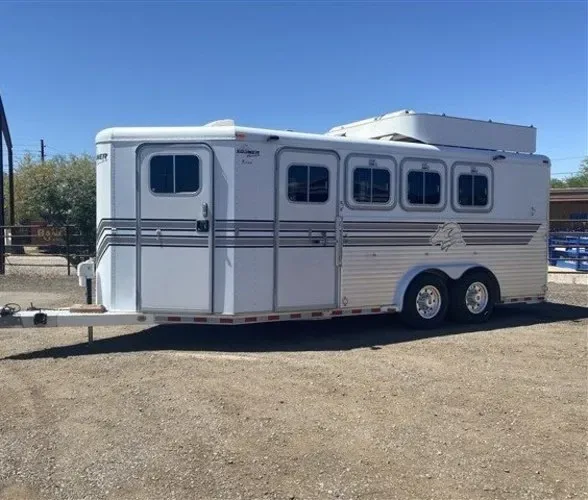
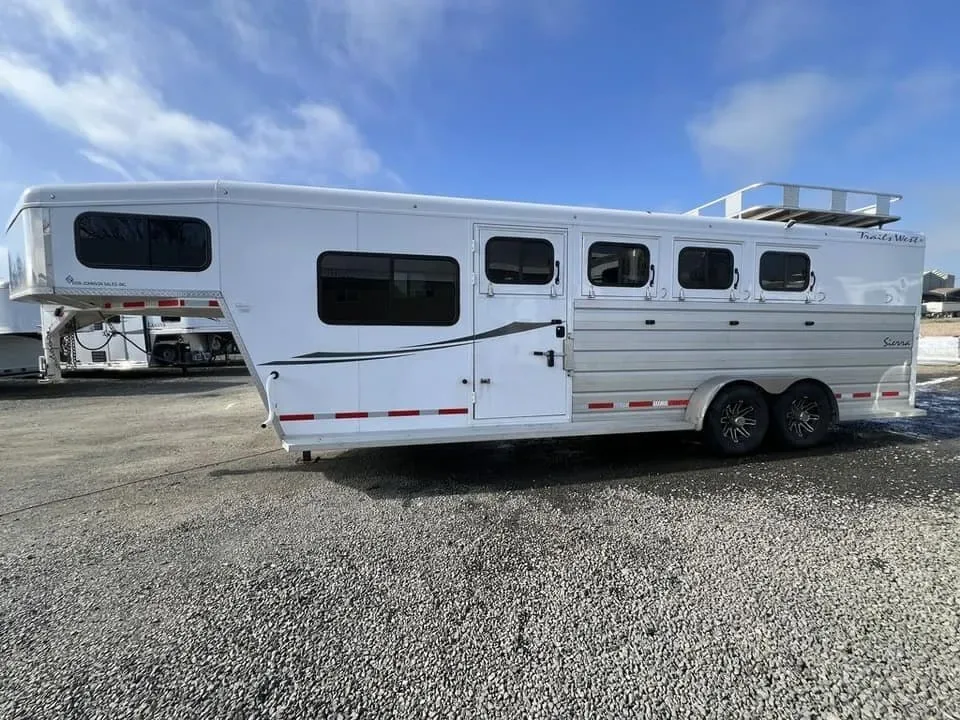
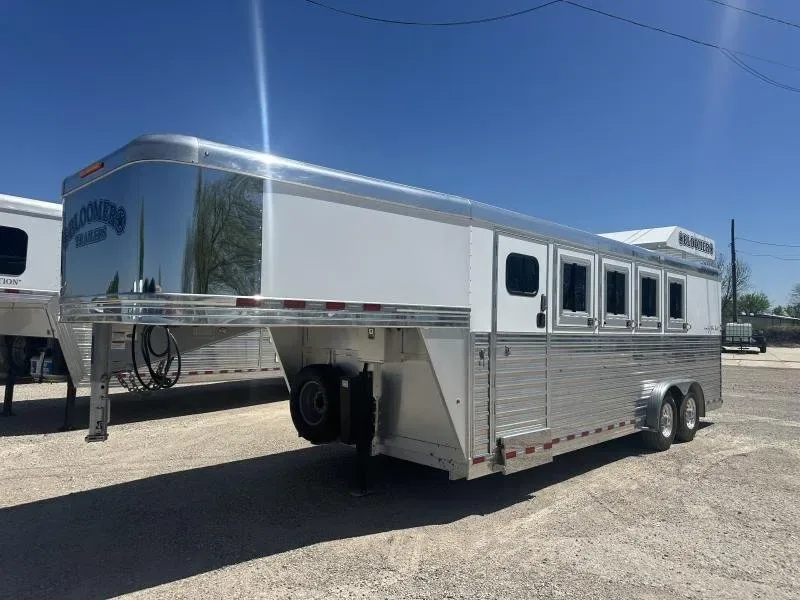
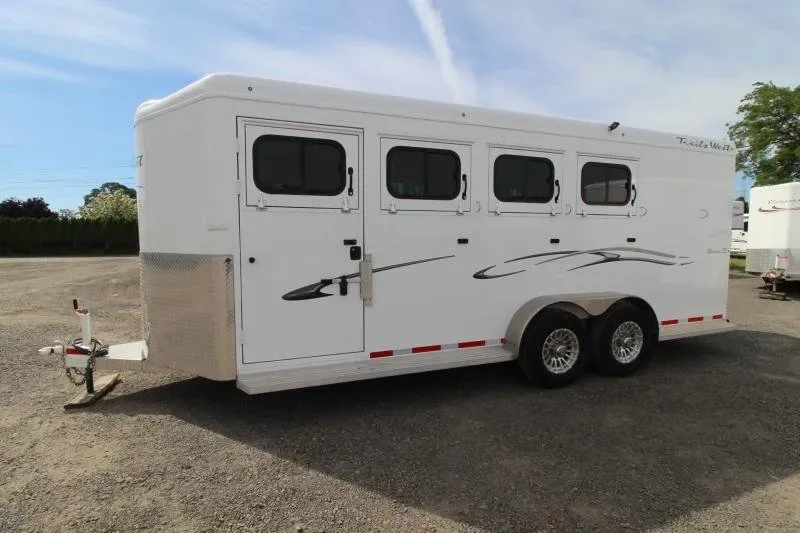
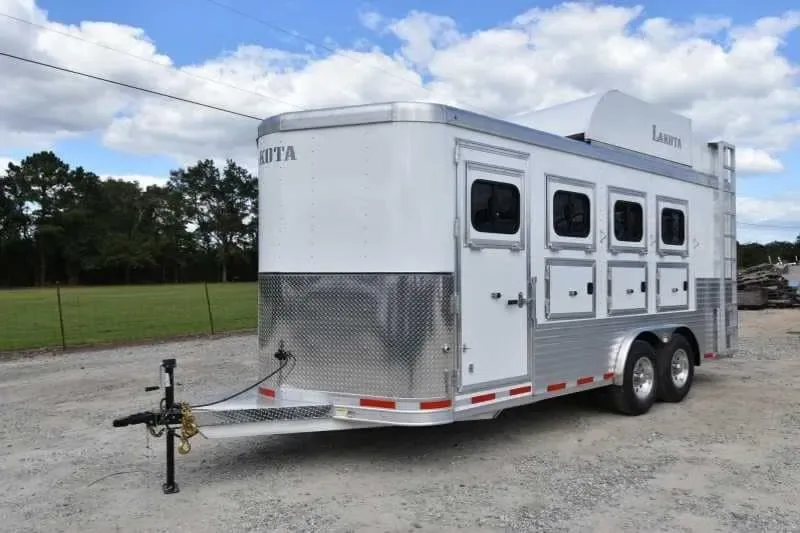
The name is the deal. Stock comes from the livestock half — the open-sided body and rear gate of a cattle trailer. Combo is the horse-trailer half bolted onto the front: a closed compartment for saddles, bridles and a change of clothes. Buyers who only ever haul horses usually end up in an enclosed trailer. Buyers with horses and something else to move end up here.
What the trailer actually looks like
Walk up to a stock combo and these are the parts you will see:
- Slatted sides. A solid lower wall about waist height, then horizontal slats or air spaces at horse head height. That is where the airflow comes from, and why a loaded horse stays cooler standing in traffic than it would in a closed box.
- An open interior. No stall dividers running nose to tail like an enclosed slant load. You get center cut gates so you can split the box into compartments, a stud divider if the model has one, and the option of letting horses travel loose or tying them to the wall.
- A full rear gate or a swing-and-slide gate. Loading is straight in from the back over a gate or a ramp. Some models carry a rear escape door as well.
- A sealed front tack or dressing room. Usually three to five feet deep, walled off from the stock area so hay, dust and wet horses stay out of your gear. Saddle racks, bridle hooks and a blanket bar are the usual fit-out.
- A livestock floor. Heavy mats over a wood or aluminum floor, built to be hosed out and scraped, with rubber-lined kick walls where hooves go.
Stock combo vs enclosed horse trailer
These are the two trailers most horse buyers weigh against each other. The difference is not quality; it is what the walls do.
| Stock combo | Enclosed horse trailer | |
|---|---|---|
| Sides | Slats or open air spaces above a solid lower wall | Solid walls both sides, with windows that drop or slide |
| Interior | Open box, cut gates, loose or tied | Slant or straight stalls with fixed dividers |
| Ventilation | Constant, through the slats | Through roof vents and open windows |
| Livestock | Cattle, sheep, goats, hogs — the trailer is built for it | Horses first; other stock is a compromise |
| Weather | Open to wind and rain unless you fit slat covers or Plexiglas | Closed, warmer in winter |
| Tack | Sealed front tack or dressing room | Dressing room, sometimes a rear tack too |
Neither is the upgrade. A stock combo is the more useful trailer on a working place; an enclosed trailer is the drier one for a horse that lives out in a cold climate or travels to shows all winter. If you want the closed version, the enclosed units are on the enclosed trailers page, and the horse trailers generally sit under horse trailers.
Who a stock combo suits
- Ranch and farm work. Moving a few head of cattle to the next pasture in the morning and a horse to the farrier in the afternoon, in one rig.
- Mixed livestock. Cattle, sheep, goats and hogs load and unload through the same rear gate a horse does. Clean it out between trips and it does both jobs.
- Trail riding and roping. A couple of horses, tack, hay and a cooler for the day, with the tack out of the weather and the horses getting air on the drive home.
- Trainers and busy barns. The trainer-tack layout — a split dressing and tack area, more saddle racks than a two-saddle weekend rig — is built for hauling four horses and a lot of gear to a show.
It suits the buyer who would otherwise own a stock trailer and hang saddles in the truck bed. It suits less well the buyer in Minnesota who hauls one horse to indoor shows all winter and never loads a cow.
What to check before you buy a used one
- The floor. Scrape the mats back. Soft spots, rot or holes in a wood floor, or heavy corrosion in an aluminum one, are the expensive find. A floor is replaceable, but price it before you agree.
- The slats and the lower wall. Push on the slats and look along the welds and rivets. Cracks and loose slats are the usual reason a stock-side trailer fails a pre-purchase look.
- The gates. Open and close every cut gate and the rear gate. Latches should slam and hold, hinges should not sag, and the gate should swing square without lifting it.
- The tack room. It only earns its name if it is dry. Check the door seal, the floor edge and the roof line above it for water staining.
- Mats. Lift them. Rust and rot hide under mats that have never been out.
- Frame, axles and brakes. Look at the spring hangers, cross members and tire dates. Brakes working on every axle is not optional on a loaded trailer.
Towing, and getting it home
The trailer's GVWR decides your tow vehicle, not the length on the sign. Add the trailer's empty weight, four horses and tack and compare that to your truck's rated towing figure and payload — the gooseneck hitch over the rear axle carries that weight better than a bumper pull, which is why most four-horse stock combos are goosenecks.
Buyers within driving distance of Concord, NC can collect at the lot and tow it home themselves; units can be inspected at the lot by appointment. Everyone else has it shipped, with the freight figure quoted to your ZIP and written on the invoice before anything is paid. Dispatch runs two to five business days after payment clears, and orders can be cancelled at no cost before dispatch. The rest is on the delivery page.
On the lot
We list a 2020 Bloomer 4 Horse Stock Combo Trainer Tack, a four-horse stock combo with the trainer-tack layout, photographed and priced in dollars like every other unit. Photos, specs and the price are on the 4-horse trailers page. If you want the layout details that matter — gate arrangement, tack door count, hitch type — call and we will walk the trailer and tell you what is on it: contact the lot.