Why the flat format suits a Boston lot
A standard 20 ft container is 8 ft wide and 8 ft 6 in tall, and it comes off a tilt-bed that wants about 75 ft of straight clear run. On a lot reached by a drive between two triple-deckers, or from an alley behind a row of them, that run usually is not there. A flat pack store is the other way round: the parts are small enough to be carried through a gate, a side passage or a doorway, and the finished store is built in place. That is why we get asked about them from Dorchester, Roxbury, Somerville, Cambridge and the tight blocks of Charlestown and the North End, and why they also turn up on job sites in the Seaport where a crane has nowhere to set up.
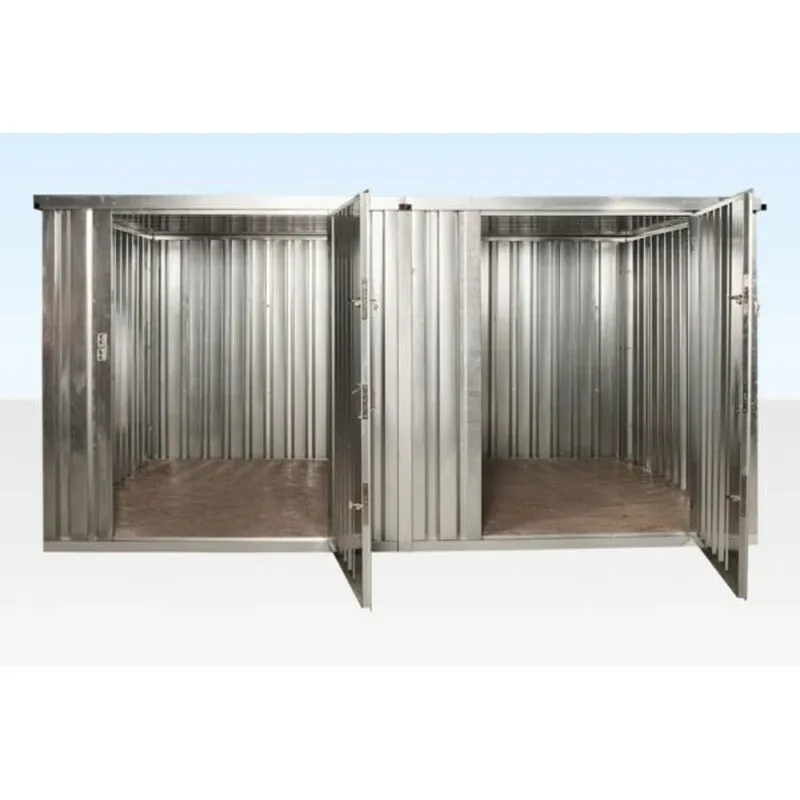
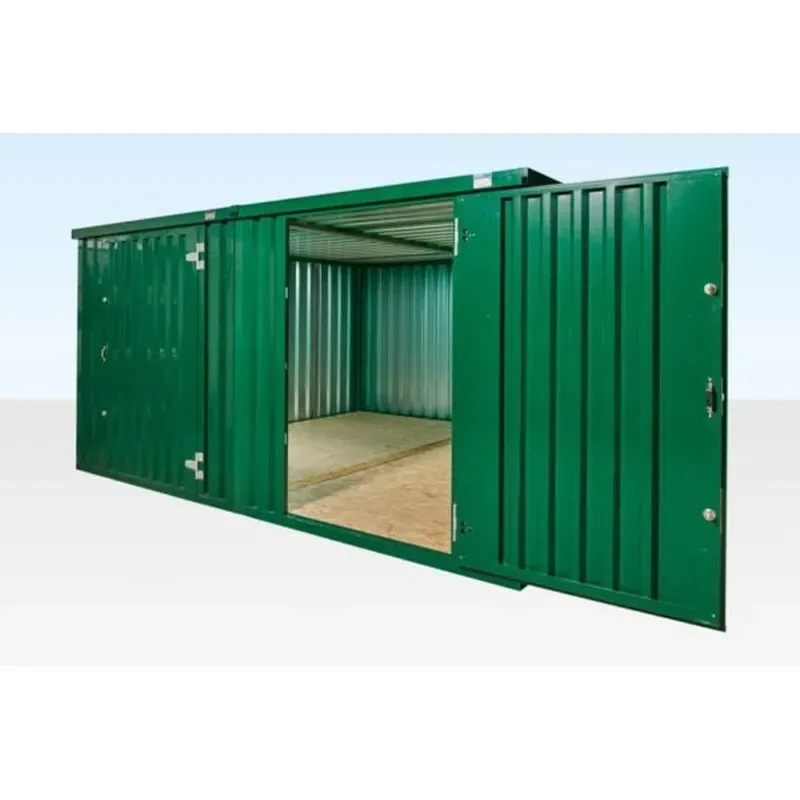
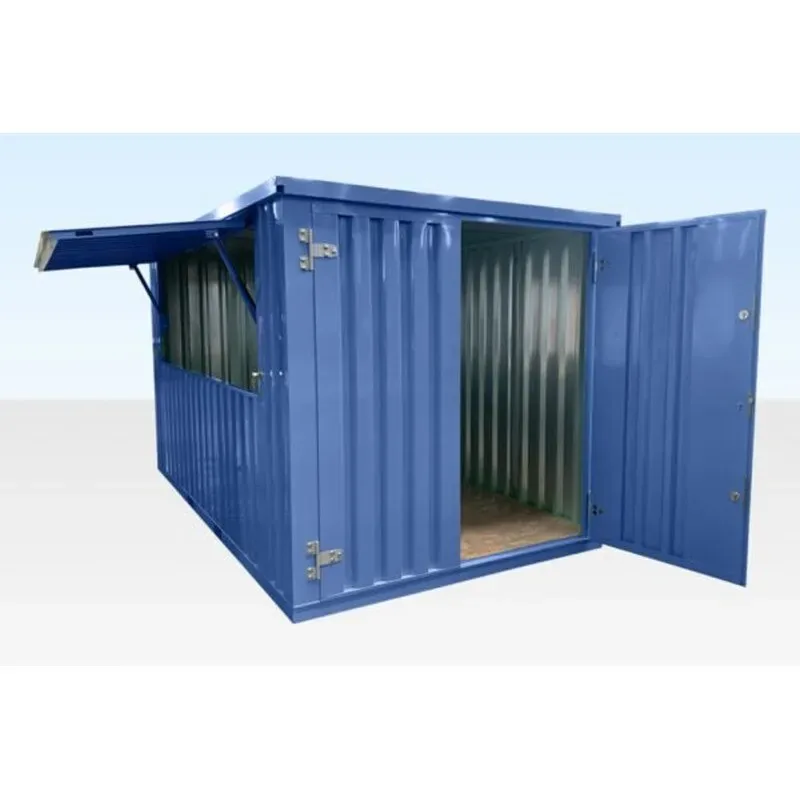
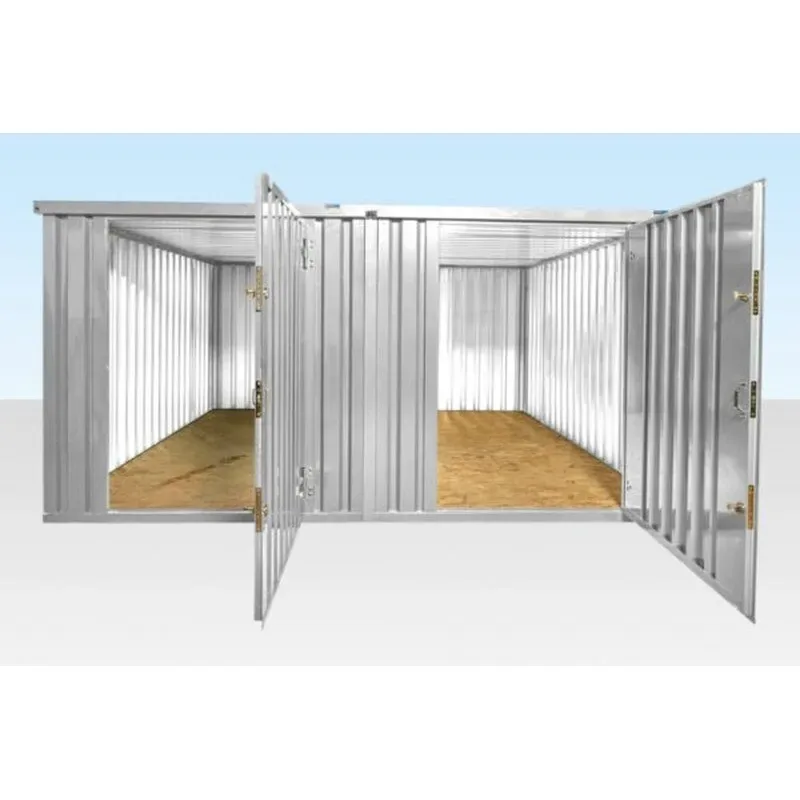
Be clear on what this is not. A flat pack store is a small steel building, not a shipping container. Sizes run 2 m, 3 m and 4 m, and bundles link two units side by side or end on end. If you have room for a 20 ft box and a truck that can drop it, a storage container gives you more cubic feet for the money. If you do not, this is the format that fits.
What actually arrives
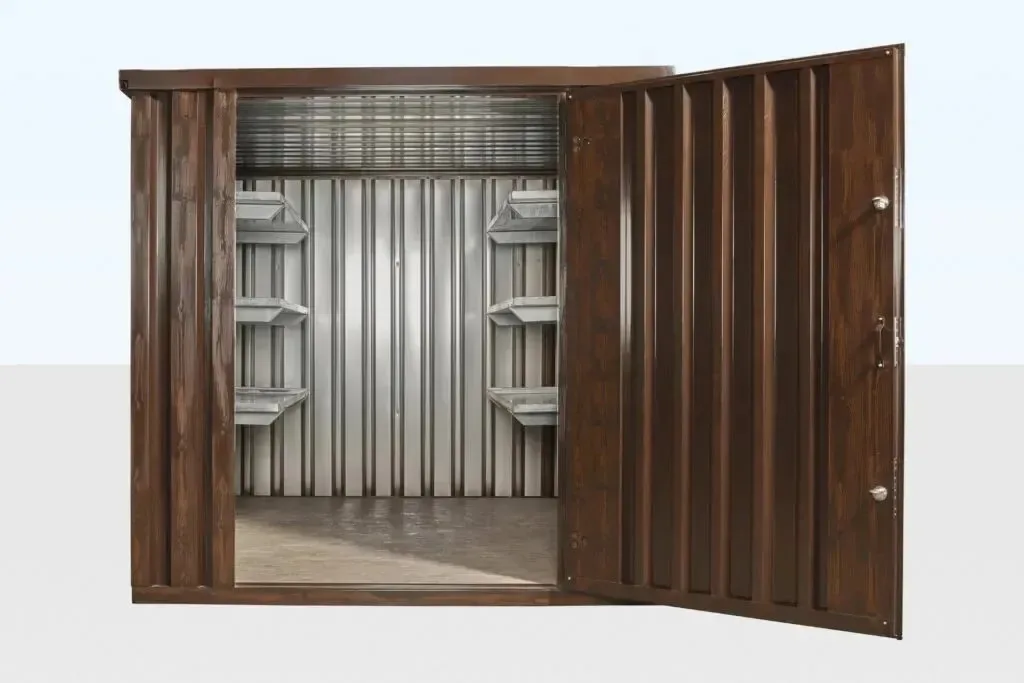
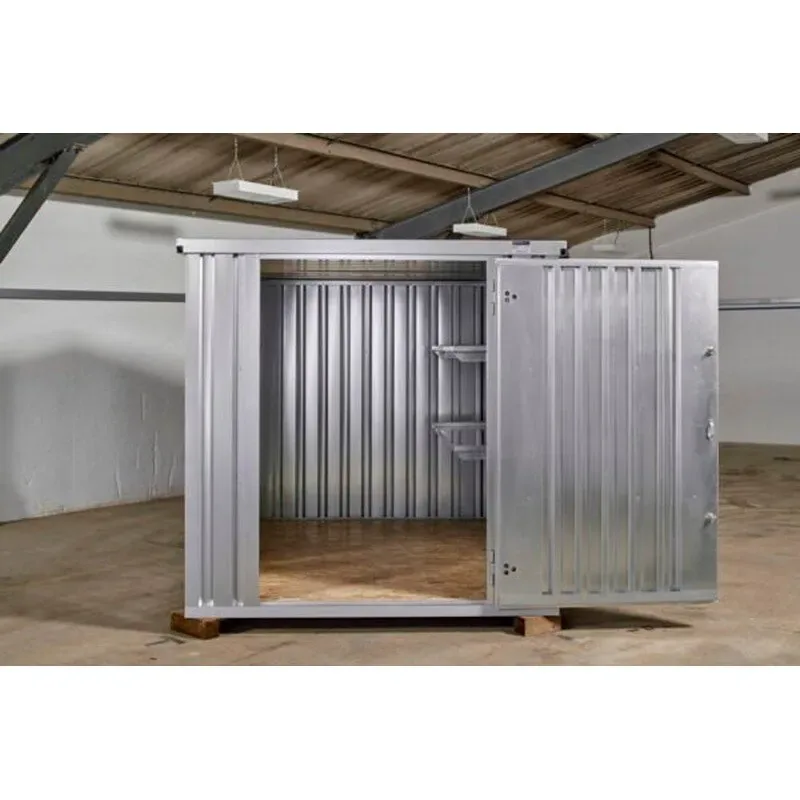
Take the 3 m unit as the example, since it is the one most Boston buyers start with. Everything below is from the listing:
| Spec | 3 m flat pack store |
|---|---|
| External size | 2.95 m long x 2.14 m wide x 2.09 m high |
| Internal size | 2.80 m long x 2.07 m wide x 2.00 m high |
| Door opening | 1.25 m wide x 1.80 m high |
| Flat-packed weight | 351 kg (774 lb) |
| Heaviest single part | 120 kg (265 lb) |
| Assembly | Bolts together with a socket set |
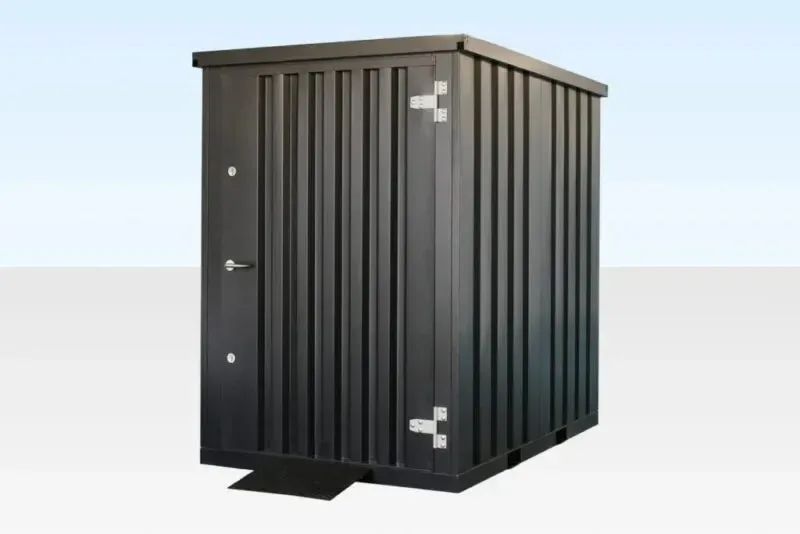
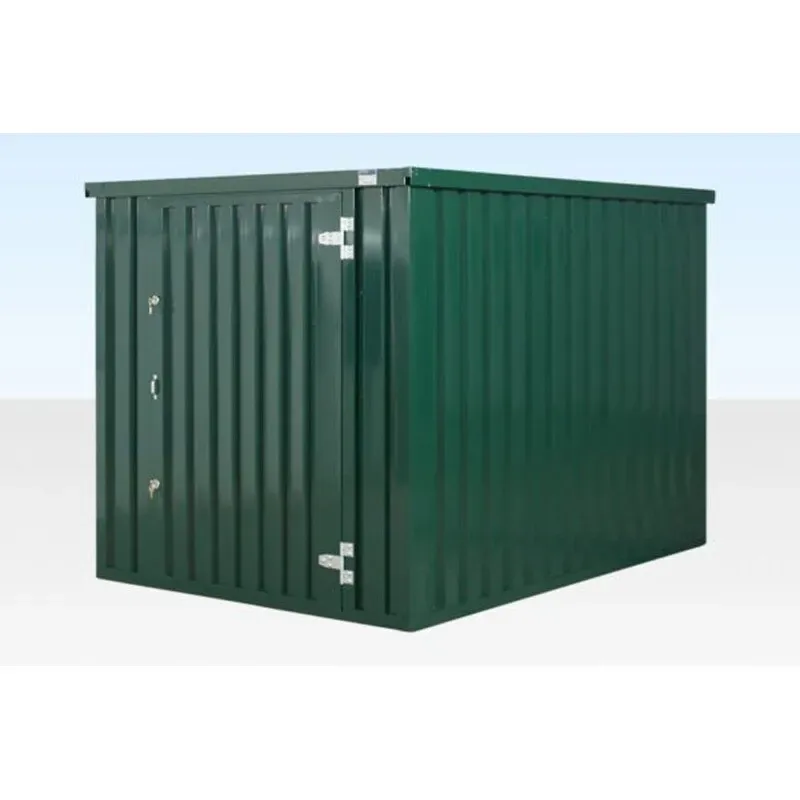
Two people can move the parts and two or three can erect a 3 m store in a session. The 8 m end-linked bundle is a different job: 842 kg flat-packed with a 153 kg (337 lb) heaviest part, so plan four to six able people on delivery day. Every unit ships with a double locking system, and lifting eyes so it can be repositioned later with cargo still inside. Galvanized or powder coated is your call — galvanizing shrugs off scratches and suits a working yard or anywhere near salt air, which on the Boston side of the harbour means most of it; powder coat gives you a color.
The route from Concord, and the Massachusetts window
Everything leaves the lot at 1122 Matchstick Pl SW, Concord, NC 28025. Boston is about 830 miles up the I-85 and I-95 corridor, roughly 13 hours behind the wheel, so your unit travels as scheduled line-haul rather than a local run. That is a real distance, and it is why we give you a date window rather than a promise of a morning.
Published transit for Massachusetts is 5-14 business days after dispatch, and dispatch happens 2-5 business days after payment clears. The freight figure is quoted to your ZIP and printed on the invoice before anything is paid — not a flat rate, because a pallet to a Beacon Hill address with no curb space and a pallet to a level driveway in West Roxbury do not cost the same to deliver. Nothing is charged on the site either: invoice first, then ACH or wire, Zelle, or a secure card payment link. You can also collect at the lot free and inspect the kit before it goes on your truck — worth doing if you are already driving through the Carolinas.
Access on the day, and the snow
The truck is a tilt-bed or a flatbed. The driver needs a straight, clear approach and firm, dry ground to set the pallet down, and in Boston that fails in three predictable ways: a driveway the plow has narrowed, a curb bank pushed up by street clearing, and a slope that has iced over. None of these is a problem if we know about them at the quote stage. Say so up front and the delivery is priced around it instead of failing on the day.
On assembly, do not build on frozen ground. A base that heaves as it thaws will put the frame out of square, and the doors will not line up again without work. Set the base in a thaw, or use a properly bedded hard base that does not move. Boston winter is also why the powder-coat-versus-galvanized question is worth asking seriously here: road salt and wet, freezing air are hard on a painted finish, and salt spray reaches well inland of the water.
Sizing for a Boston yard
Small gardens and side yards take a 2 m or 3 m store. Two 3 m units side-linked give about 11.3 sq m, roughly 121 sq ft, with two door sets — enough for a contractor's kit or a club's gear. The 8 m end-linked bundle is the one for long loads: 7.56 m of internal run behind a 1.25 m door, which is scaffolding, conduit, pipe, ladders and timber, and it is the configuration trades and utility crews buy. One rule applies to every bundle: a linked structure joins in one direction only, side by side or end on end, never both.
If you are weighing this against a steel box, our storage containers are the honest comparison, and the buyer's guide covers sizes and grades. All the flat pack options are in the flat pack category under offices and cabins.
Permits and neighbours
Boston is a permit town, and the rules differ between a store that holds goods and a structure someone works in every day. Call the city's building department before you order rather than after — the answer depends on size, footing and what you intend to do inside, and no two neighbourhoods read it quite the same way. Our FAQ covers the general shape of that question. If the store is going in a shared yard, clear it with the other owners first; a bolted structure is easy to move, but a disagreement is not.