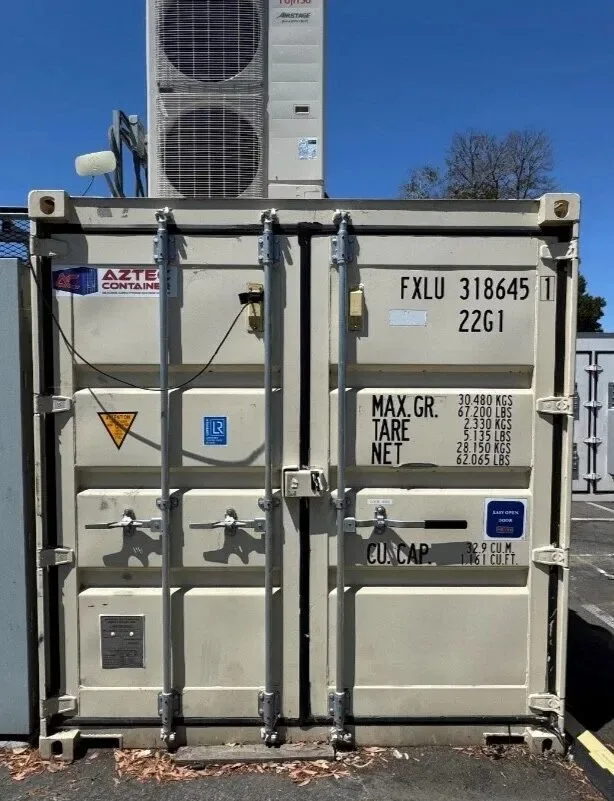
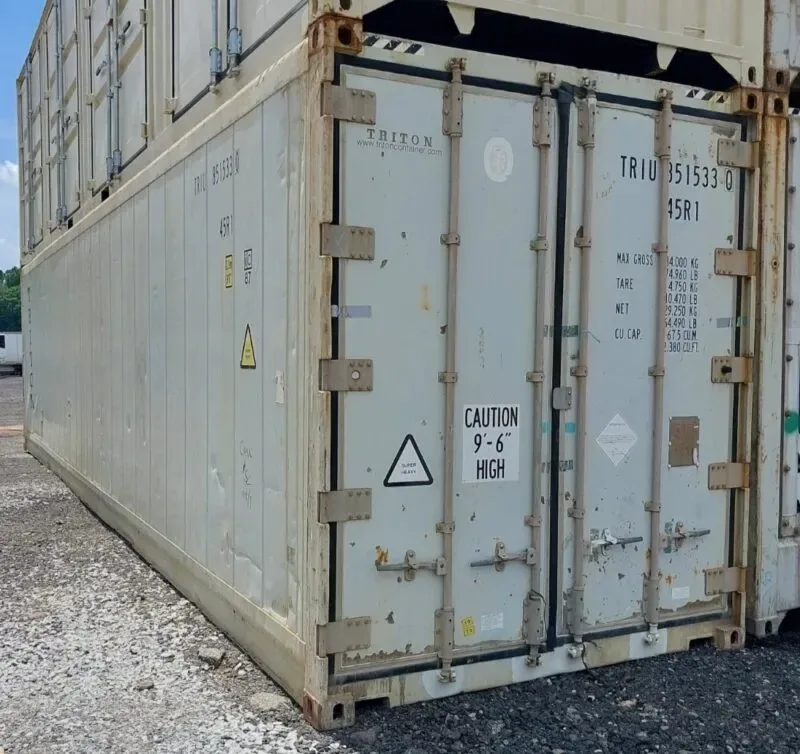
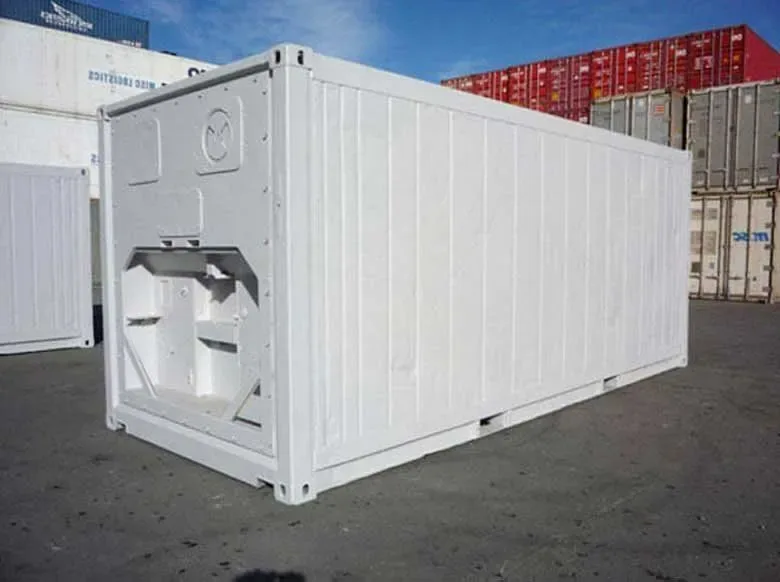
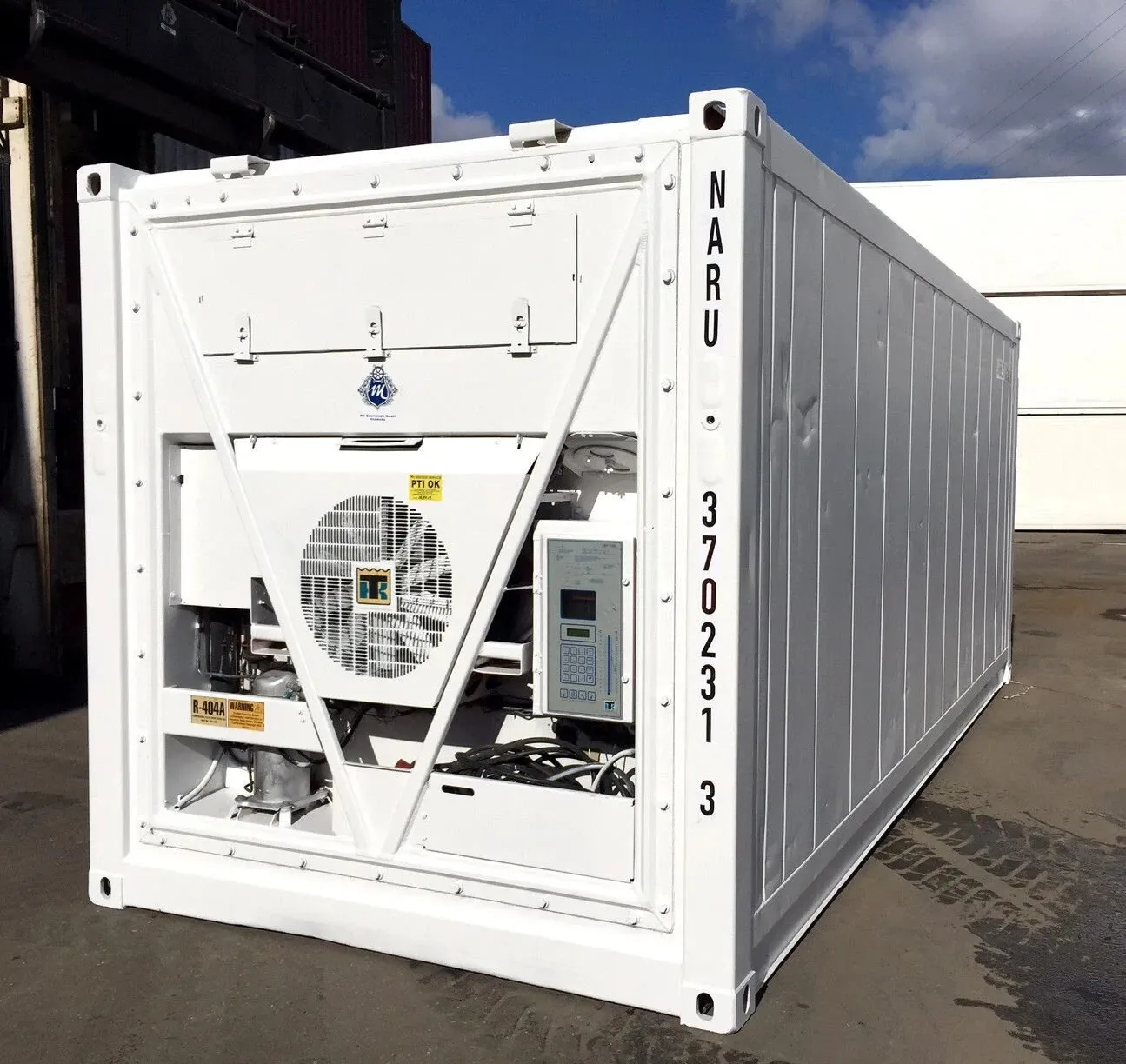
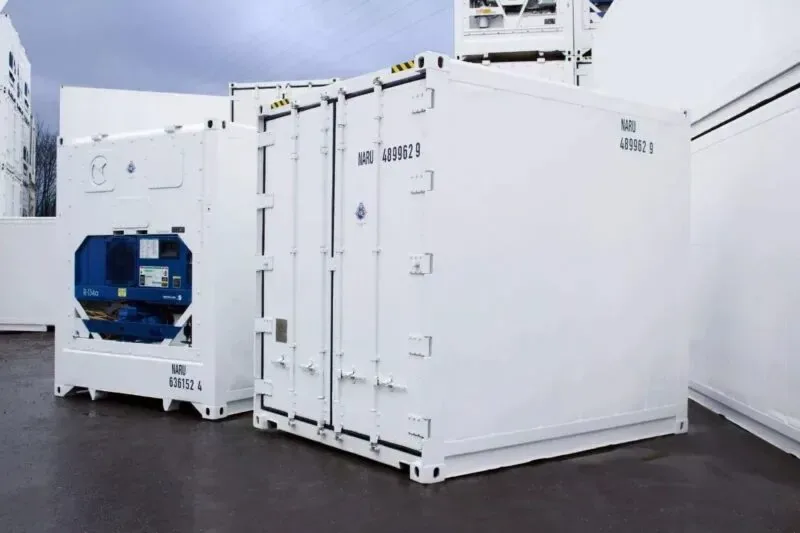
 10ft Freezer Reefer Container – Compact Mobile Cold Storage — tap to view
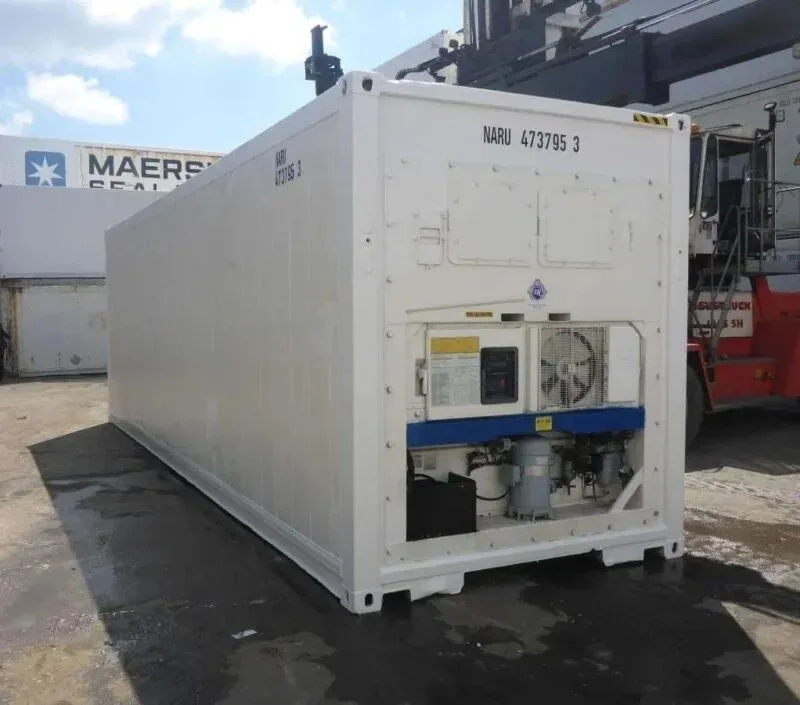
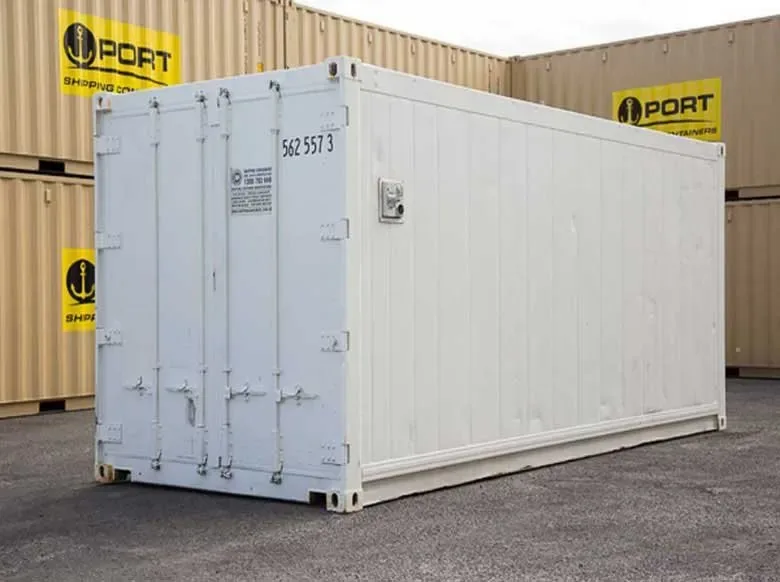 20ft Refrigerated Containers — tap to view
Pick the temperature first, then the box
Farms come at cold storage from three different directions, and they need three different units.
- Chilled holding. Our 20ft used reefers are listed at roughly -25°C (-13°F) to +25°C (77°F) and the new 20ft and 40ft refrigerated containers are listed with a variable control across the same spread. That is one box that can hold eggs, dairy or packed produce cool in one season and pull down to hard freeze in another.
- Freezer work. The 20ft blast freezer is listed from -40°F up to 70°F on 460V/230V three-phase, built for pulling product down fast rather than holding it. The 40ft high cube freezer units are listed at +25°C to -25°C on standard models and +45°C to -40°C (-40°F) on newer ones.
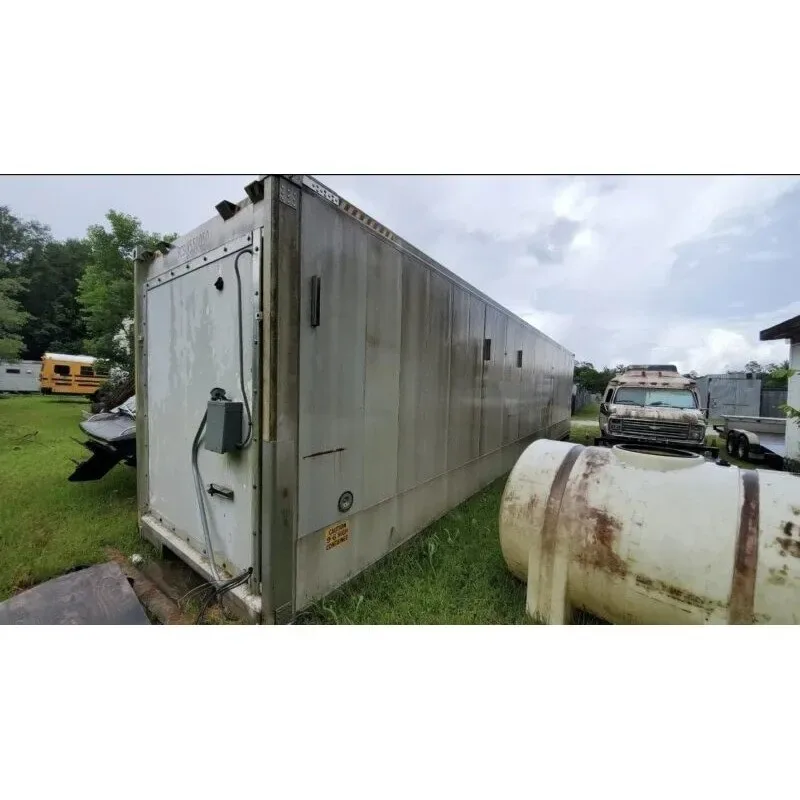
- Insulated only. A non-operational reefer — machinery pulled, sold as an insulated container — holds a steady ambient temperature. It takes the edge off a frost and keeps feed, seed and equipment dry. It will not chill meat, and it will not freeze anything.
Be honest about the job. A farm stand that sells eggs and greens and a producer packing whole birds do not need the same box, and the freezer unit costs more to buy and more to run. Set points differ by product too, so fix the temperature you need before you fix the size.
Match the power to the site, not to the house
This is where most farm orders stall, and it is worth sorting out before you look at photographs. The listings state the power each unit wants, and they are not all the same:
| Unit | Range as listed | Power as listed |
|---|---|---|
| 10ft freezer reefer, new | -25°C to +25°C; newer models -40°C to +45°C | 380V / 32A (CEE 50Hz) |
| 20ft blast freezer, new | -40°F to 70°F | 460V / 230V, 3-phase |
| 20ft used reefer | approx. -25°C (-13°F) to +25°C (77°F) | Not stated on the listing — ask us before ordering |
| 40ft high cube freezer, used | +25°C to -25°C; newer models +45°C to -40°C | 380V / 32A, 6-10 kWh |
| 40ft Carrier Thinline, used | -20°F to +70°F | 460V, 3-phase |
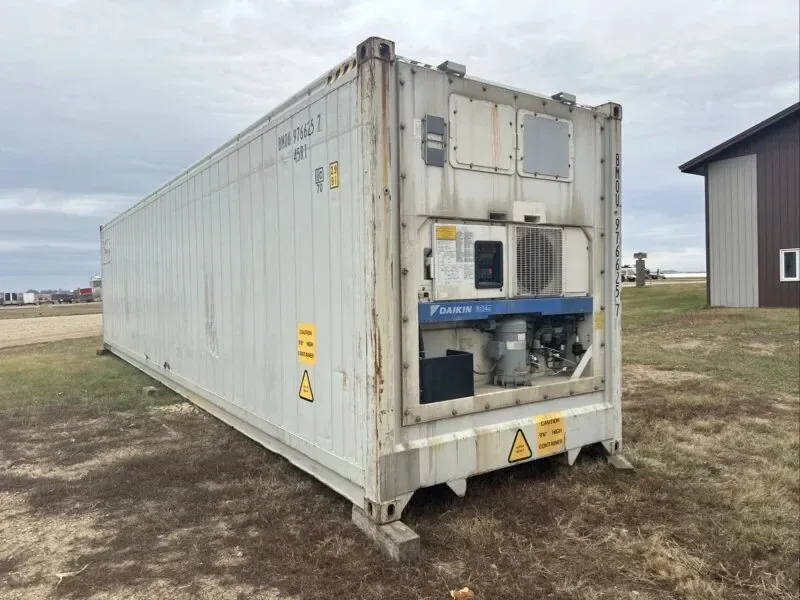
| 40ft Maersk / Daikin LXE10E-1E, used | Not stated on the listing | 380-415V/50Hz or 440-460V/60Hz, 13.5 kW consumption |
There is a plain reason for the spread: these are second-hand and ex-container units built for different trades, so the compressor end carries whatever it was made with. Three-phase is required on several of them, and three-phase at a barn or a back field is unusual. The new 20ft and 40ft refrigerated listing also covers single-phase units, which is the usual answer where the site only has ordinary service.
Two practical points. First, the unit needs a power source or a generator — the listings say so outright — so if the box is going out to the field rather than beside the barn, price the generator in with the unit. Second, get an electrician to look at the service at that spot before you pay. Voltage and phase cannot be changed on the invoice afterwards, and a unit that arrives without the power to run it is a very expensive shed.
Placement: the pad, the airflow and the delivery run
Reefers are heavier than dry boxes of the same length and they need air. Site them accordingly.
- Firm, dry, level ground. Compacted gravel, concrete or a proper timber pad. Not soft pasture in March, and not a slope.
- Clear the machinery face. The refrigeration unit sits at the front of the box and sheds heat. Keep that face open to the air — not against a barn wall, not inside a lean-to, not buried in hedge. Do not roof over it.
- Keep the floor grating clear. These units use an aluminium T-bar or T-grating floor with an air duct so cold air moves under and around the load. Pallets laid flat across the channels, or a solid sheet of ply on the floor, kills the airflow and creates warm pockets.
- Plan the condensate. The listings call for a level pad so condensate drains cleanly. Standing water at the door freezes, rots the gasket and gets tracked inside.
- Shade helps. A box in full summer sun works harder than one under a roof line or a shade structure, with the machinery face still open.
- Measure the run before you order. Tilt-bed delivery needs a straight, clear run of about 75 ft for a 20ft and about 110 ft for a 40ft, with 14 ft of overhead clearance for the truck and the load on the bed. Farm gates, low wires, overhanging limbs and a soft lane after rain are the usual blockers.
Judge a used reefer on the machinery, not the paint
The steel is rarely the problem. The refrigeration is. What to check, and what the listings already tell you:
- PTI. A pre-trip inspection is a full operational test of the refrigeration system. Every used reefer we list has had one before it leaves the lot. Ask for it in writing.
- Door gaskets. The double rear doors seal on airtight gaskets. Split or flattened gaskets let in warm damp air and the unit runs flat out trying to keep up.
- Insulation and liner. Dents in the stainless or aluminium liner and damaged panel joints mean wet insulation, and wet insulation does not come back.
- Model year and hours. A late unit with low hours is worth more than an old one that has run continuously. One of our 20ft units is a 2021 Thermo King from a facility closure, lightly used.
- Refrigerant type. Listings state R134a, R404a or R452a depending on the unit. It decides who can service it locally and what a regas costs later.
- What it carried before. Worth asking. The 2021 Thermo King above never held food — it only chilled equipment — and that is a cleaner starting point for a food business.
- CSC plate. Valid on the units listed; it is the safety and structural certificate for the box.
- See it run. Units can be inspected at the lot in Concord, NC by appointment, and we would rather you did that than take our word for it.
Sizes, in farm terms
10ft is a farm stand or a CSA pick-up box. It has forklift pockets, so it can be shifted with a lift truck when the season moves, and it is listed at 380V / 32A.
20ft is the usual farm unit. The new 20ft refrigerated container is listed at 28.3 m³ inside, and the length sits on most yards and driveways without a fight. A 20ft used reefer needs less power to run than a 40ft, which on a farm with a marginal service is often the deciding point.
40ft and 40ft high cube are for volume: 57.8 m³ on the new 40ft, 67.5 m³ and about 23 euro pallets on the high cube freezer, or roughly 2,400-2,700 cu ft. Note that the inside is shorter than the outside — one 40ft listing gives 38 ft of internal length — because the machinery and ventilation take the front of the box. If you are sizing against a walk-in you already have, measure the inside, not the steel.
There is also a 30ft customised cold storage cell in the range, which is the odd size that suits a specific packing line rather than a general yard.
Ordering and getting it onto the farm
Every unit is photographed and priced in USD on the site, and nothing is charged there. Checkout sends an invoice; you pay by ACH or wire, Zelle, or a secure card link. Delivery is quoted to your ZIP and the figure is on that invoice in writing before anything is paid — there is no flat rate, because a box going to a farm lane in the mountains is not the same job as one going to a paved industrial yard.
Dispatch is 2-5 business days after payment clears, by tilt-bed, flatbed or step-deck with a crane depending on the unit. Published transit after dispatch, in business days, runs 2-7 for Ohio and bordering states, 4-10 for the Midwest, Mid-Atlantic and Southeast, 5-14 for the Plains, Gulf and New England, 7-18 for the Mountain West and West Coast (longer where a crane or escort is needed), and 14-30 for Alaska and Hawaii by ocean freight, quoted case by case.
Pick-up at the lot in Concord, NC is free if you would rather collect it yourself. Orders can be cancelled at no cost before dispatch. Damage or faults reported within 48 hours of delivery are repaired, replaced or refunded, with return freight paid by Ironyard. Unused items can go back within 14 days, with return freight at cost and a 15% restocking fee on freight-delivered goods; custom, modified and filled or installed items are excluded.
Read the buyer's guide for the grades and sizes, the delivery page for how the truck gets in, and payment methods for the invoice step. The full cold range sits under insulated containers, with the larger freezer boxes under high cube containers and everything else in containers.