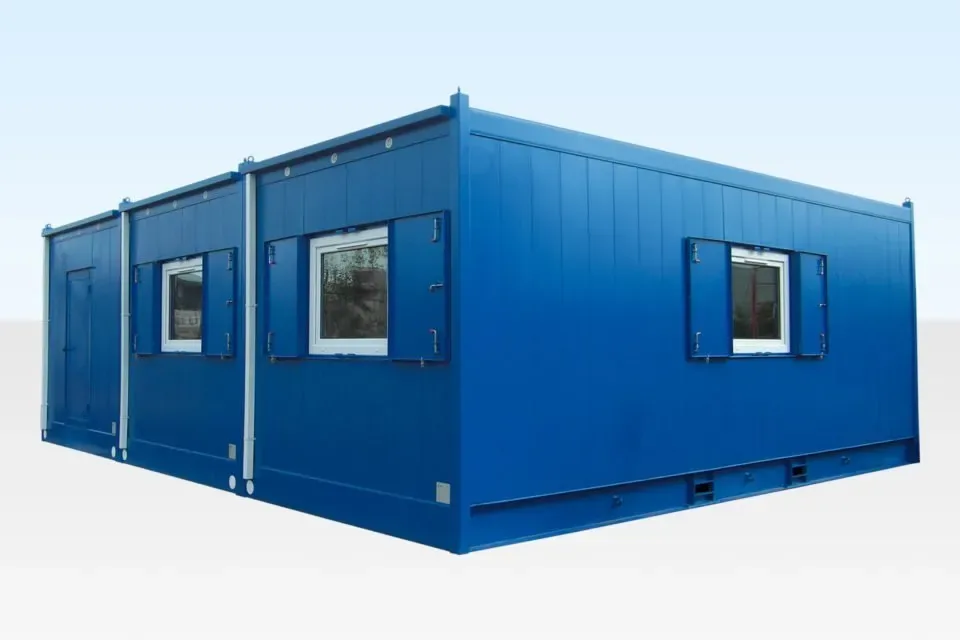
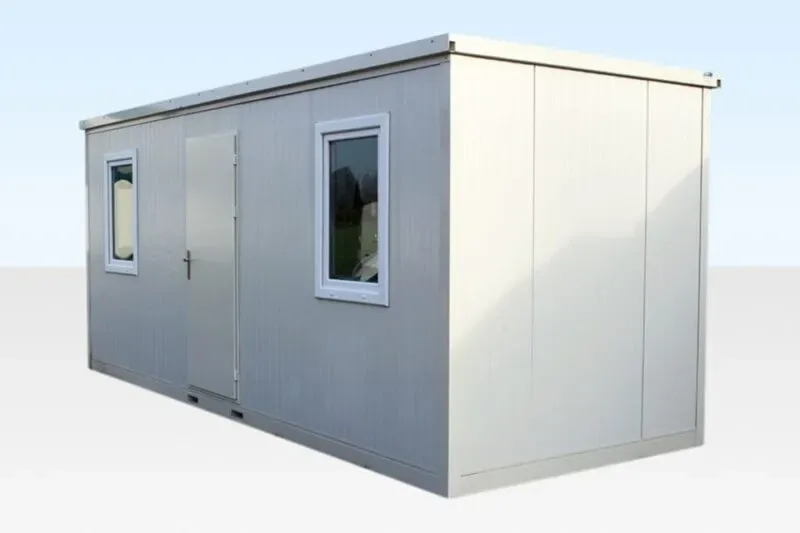
 (6.5m x 2.3m) Large Flat Pack Office — tap to view
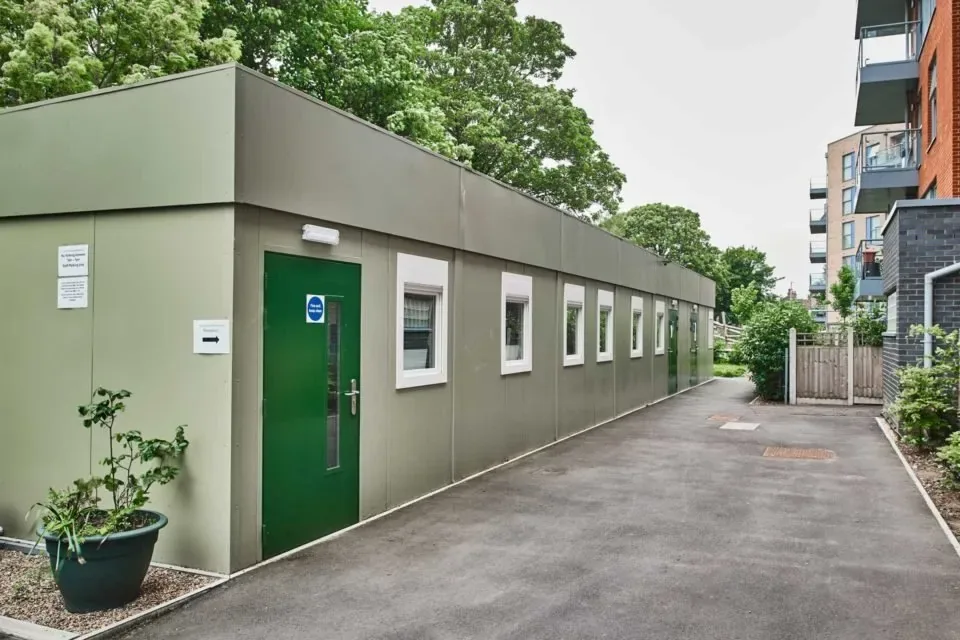
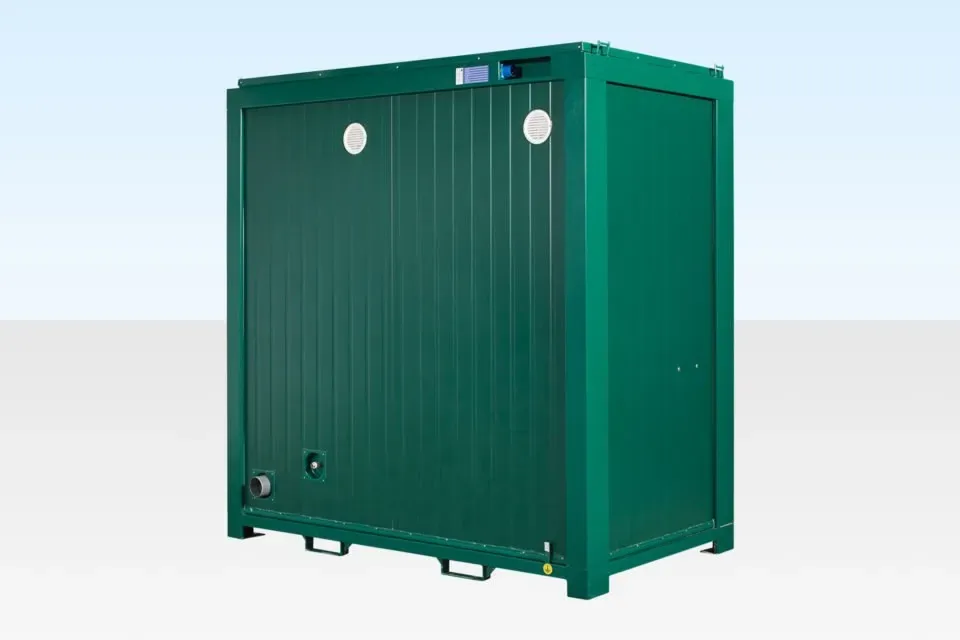 1+1 Double Mains Toilet 8ft x 5ft (Green) — tap to view
Why a steel box sweats
Steel has no real insulation value, so a container's roof and walls follow the outside temperature closely. Sun on the roof warms the air inside, and warm air holds more water: roughly twice as much at 86°F as at 68°F. When the sun drops or a front moves through, the steel cools in minutes while the air inside is still warm and damp. That air touches the steel, reaches its dew point, and leaves water on the surface. It drips off the roof onto whatever is stored underneath. The trade calls it container rain.
Two conditions make it much worse. A closed box in a humid climate, which is most of the Southeast, the Gulf Coast and the Mid-Atlantic in summer. And a wide day-to-night swing, which is the desert Southwest and the high plains: hot days, cold nights, water on the ceiling every morning.
Where the water is actually coming from
Before you buy a vent, work out what you are fighting. There are four usual sources and most containers have two or three at once.
- The air. Every time you open the doors on a humid day you swap dry inside air for damp outside air. Shut it up and that moisture stays.
- The floor. A container floor is plywood over steel cross members. It takes up moisture from damp ground underneath and gives it back into the box.
- What you put in. Damp cardboard, green or wet pallets, unseasoned lumber, firewood, hay, wet tarps, wet mowers, fertilizer, fuel cans. All of it releases water into the air for weeks.
- Leaks. Door gaskets that no longer seal, roof seams, a rust hole, a badly cut vent hole. Rain gets in and never gets out.
Fix one: a dry base and drainage
A container sitting on soil or wet grass wicks ground moisture up through the floor. Set it on something that drains and stays dry: 4 to 6 inches of compacted crushed stone, timber or steel bearers on firm dry ground, or a concrete pad. Grade the ground so water runs away from the doors instead of pooling against them.
This is the cheapest fix and it deals with one of the biggest sources. It also decides how delivery goes. A tilt-bed drop needs firm, dry ground and a clear straight run: about 75 ft for a 20 ft and about 110 ft for a 40 ft, plus 14 ft of overhead clearance. Soft ground after rain is where trucks get stuck. The buyer's guide covers site prep in more detail.
Fix two: two vents, on opposite ends
One vent in one wall does very little. Air has to go in at one end and out at the other, or it just sits there and the water still forms. Two setups work:
- Cross-flow. A louvered vent on each end wall, at a similar height, on opposite faces of the box. Wind from any direction catches one and pushes air through.
- Stack effect. A louver low on one end and a roof turbine (whirlybird) high on the other. Warm air rises out of the roof vent and cooler air is drawn in low.
Fit screens so insects and mice stay out, and seal around the cut so the hole does not become the next leak. Keep the openings above the floor line and clear of where the doors swing.
Venting is a modification and it is permanent. If there is a chance you will resell the unit as a one-trip box, weigh the holes against that. And if the goods have to stay sealed and dry, a vent alone will not do it.
Fix three: move the air
Condensation forms on surfaces, and the surfaces that matter most are the ceiling and the top of the walls. A fan that keeps air moving across them is often enough to stop water forming at all. In a box with no power, a small solar or 12V fan is the usual answer. Where there is mains power, a fan on a timer does more, and a dehumidifier does more again.
A dehumidifier is the right tool for a container you work in rather than fill: an office, a shop, a fit-out. Keep it under about 55% relative humidity, drain it outside rather than into a bucket you forget, and keep the doors shut. It cannot keep up with the doors standing open all day.
Fix four: keep wet goods out
- Pallets and lumber: air-dry them off the ground before they go in. Green timber is a sponge.
- Cardboard: use plastic totes or racking for anything that must stay dry. Cardboard takes moisture out of the air and holds it against what it is touching.
- Tools and machines: a light oil film and a cover beat any absorber for rust.
- Fertilizer, pool chemicals, fuel: sealed, and not stored next to goods you care about.
- Tarps, boots, mowers: dry them outside first. A wet mower deck in a closed box is a litre of water.
Fix five: a desiccant, once the box is tight
A desiccant pulls water out of the air and holds it. We list the Container Dry Stick under container accessories: it hangs from the standard roof lashing points, takes up to two litres of water per stick into a membrane so it does not go back into the air, and lasts roughly 6 to 12 weeks depending on conditions. The listing's guide is about two sticks per 10 ft of container length, more if the doors are opened often or the load is damp.
Here is the trade-off most people miss. A desiccant works best in a closed box, and the listing tells you to tape the standard vents for exactly that reason. If you have already fitted cross-flow vents, you have chosen the other approach: exchange the air and accept outside humidity, rather than seal it and dry it. Pick one. Running both wastes the desiccant.
Two rules either way. A desiccant has a limit and needs replacing, not topping up. And it will not fix an active leak or a wet load. Put it in after the other fixes, not instead of them.
What makes it worse
- Sealing every gap and calling it done. You have trapped the moisture instead of removing it.
- One vent, one end, no outlet.
- Insulating the ceiling without controlling moisture. Spray foam moves the dew point into the foam instead of onto the steel, which stops the dripping, but a damp load still molds the contents.
- Mattresses, carpet, upholstery and cardboard stacked on the floor, where the floor moisture comes up into them.
- Goods stacked tight against the walls and ceiling, with no path for air to move.
- Leaving the doors ajar all season. Rain, mice and dust get in and the air still does not move reliably.
A sensible order of work
- Dry base and drainage.
- Check the door gaskets and roof seams, and fix what leaks.
- Two vents, opposite ends, screened and sealed around the cuts.
- Racking, so goods sit off the floor and off the walls and air can move between them. Container racking and accessories.
- A desiccant if the box stays sealed, the goods are moisture-sensitive, or you cannot vent.
- A dehumidifier if it is a space you use rather than a box you fill.
When it is not just storage
An insulated container or a modified office is a different problem. You have sealed the box and put people, equipment or a fit-out inside, so the moisture now comes from breath, cooking, damp coats and the build itself. That has to be handled with a vapor barrier and controlled ventilation, not two holes in a wall. Insulated containers hold temperature better and modified and office containers arrive with the fit-out in, but neither is a condensation fix on its own.
If you are still choosing the unit, size and grade matter as much as venting. A one-trip box has tight doors and a dry floor; a used wind-and-watertight box costs less and will want more attention. Storage containers in stock are photographed and priced per unit, and the FAQ covers condition, delivery and payment.