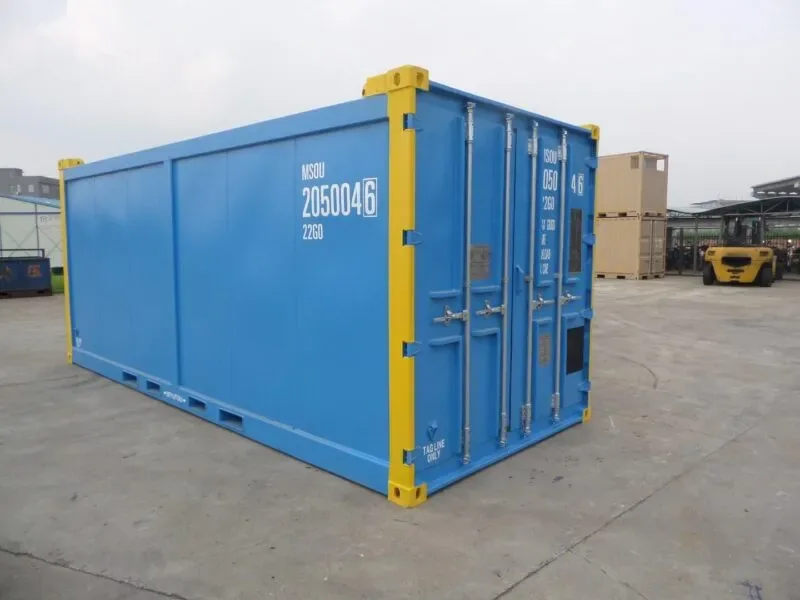
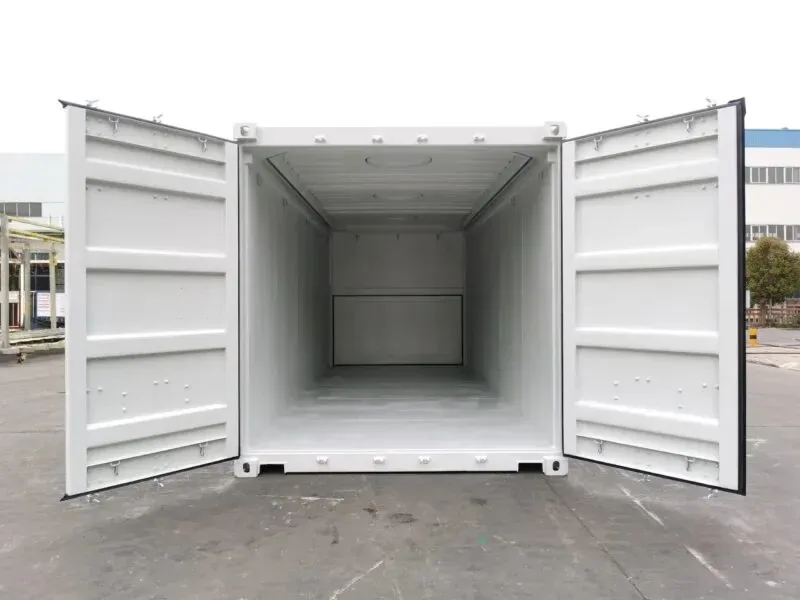
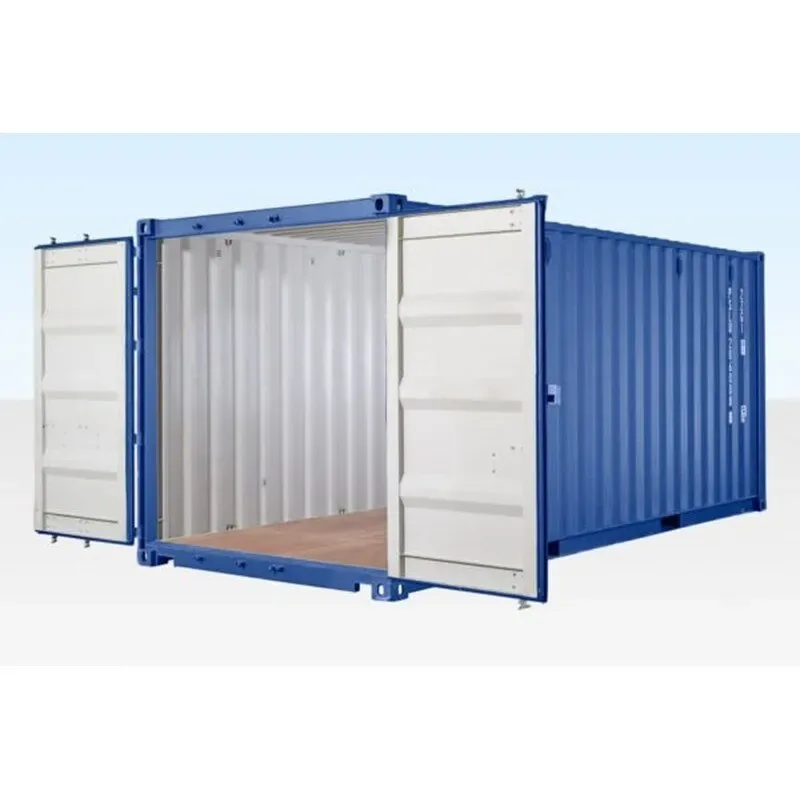
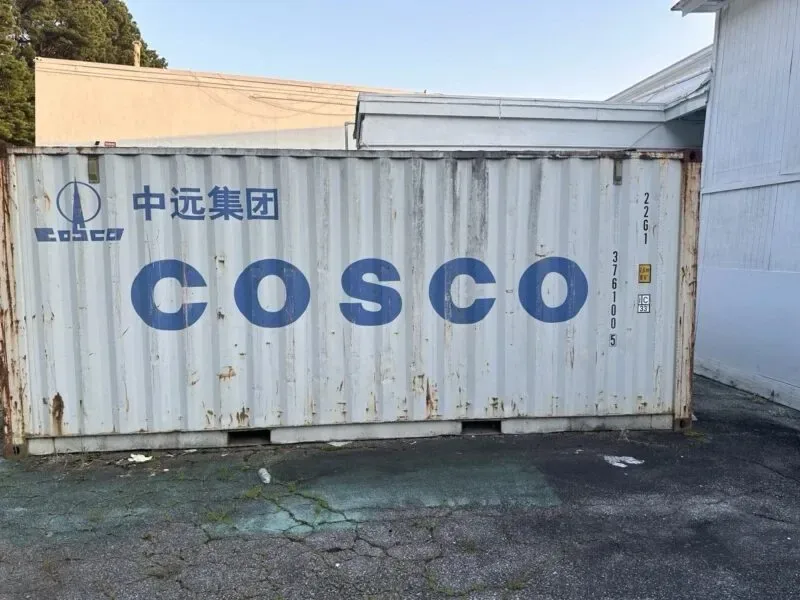
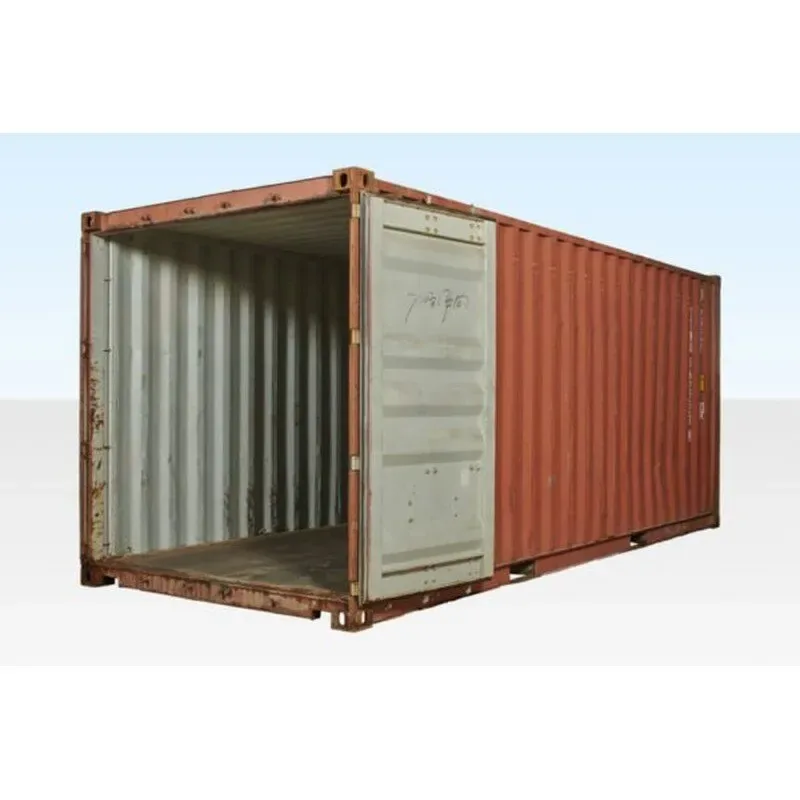
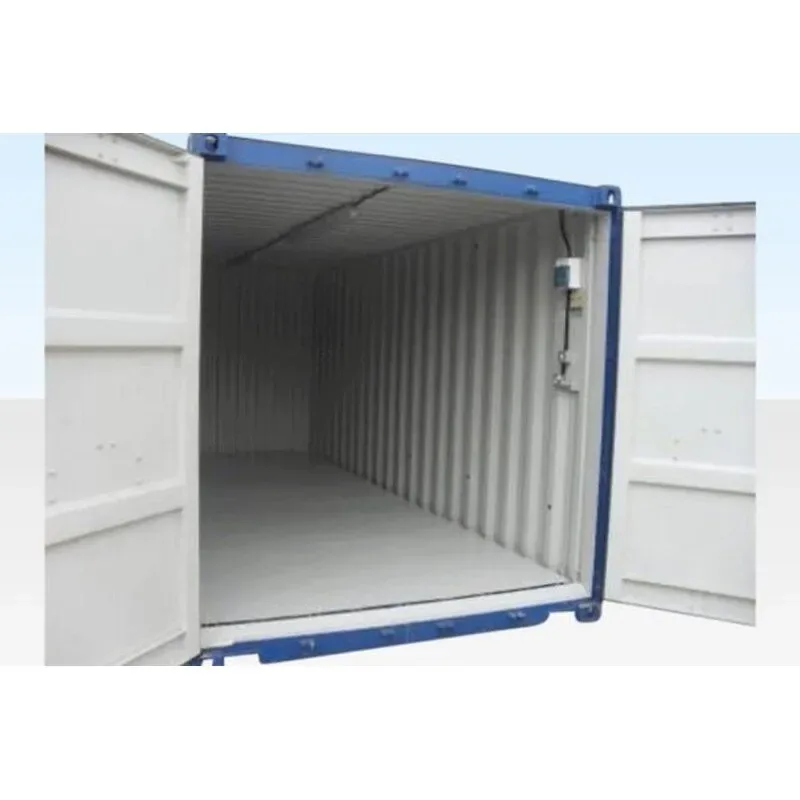
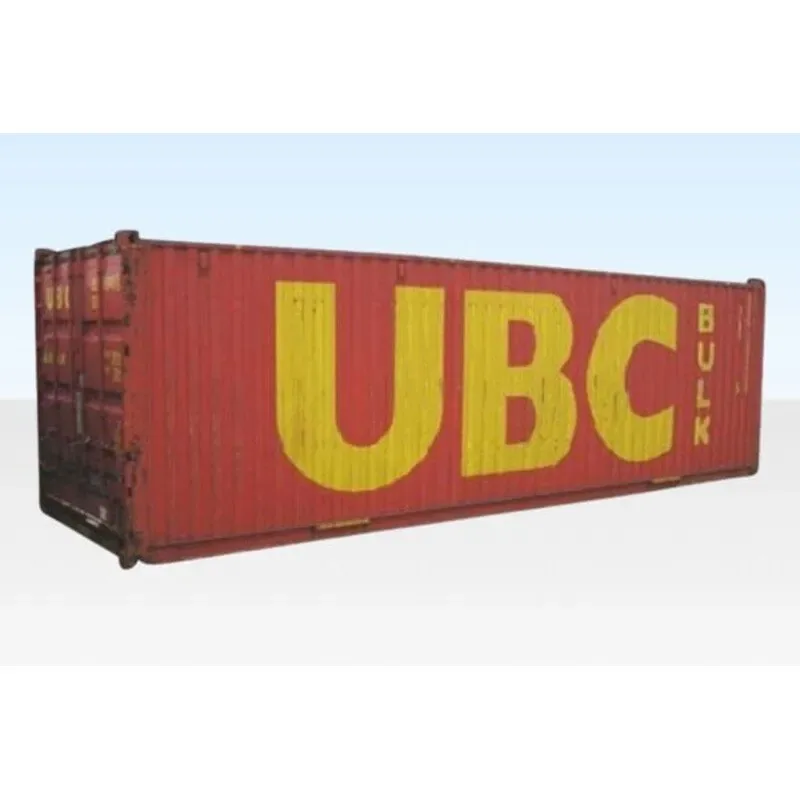
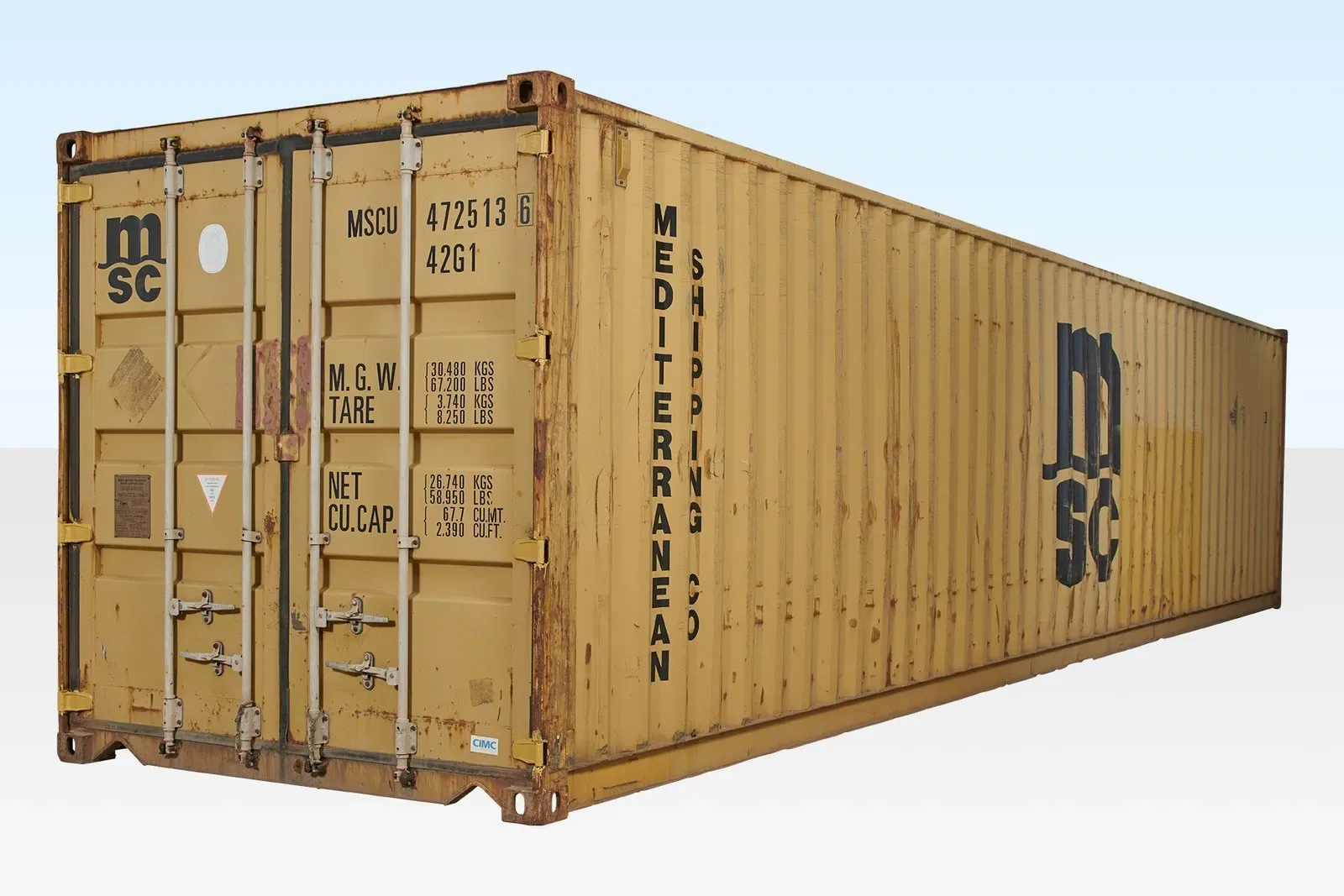
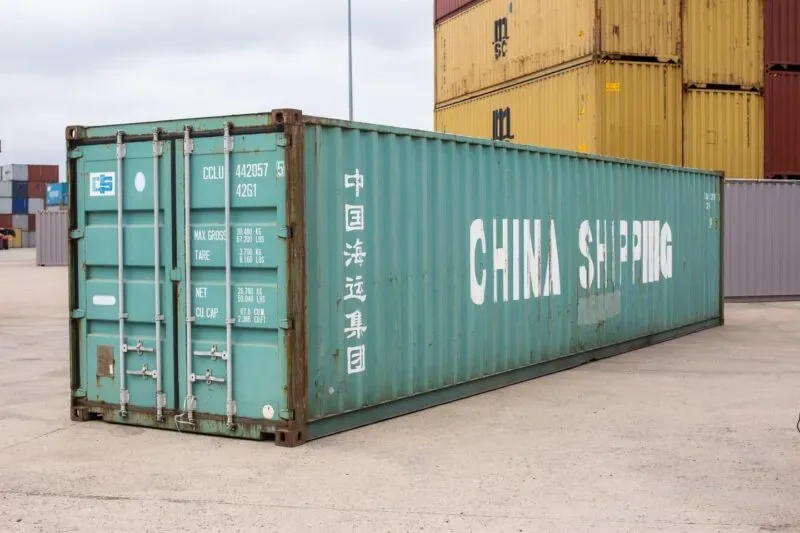
 40ft Preloved Shipping Container – Wind & Watertight — tap to view
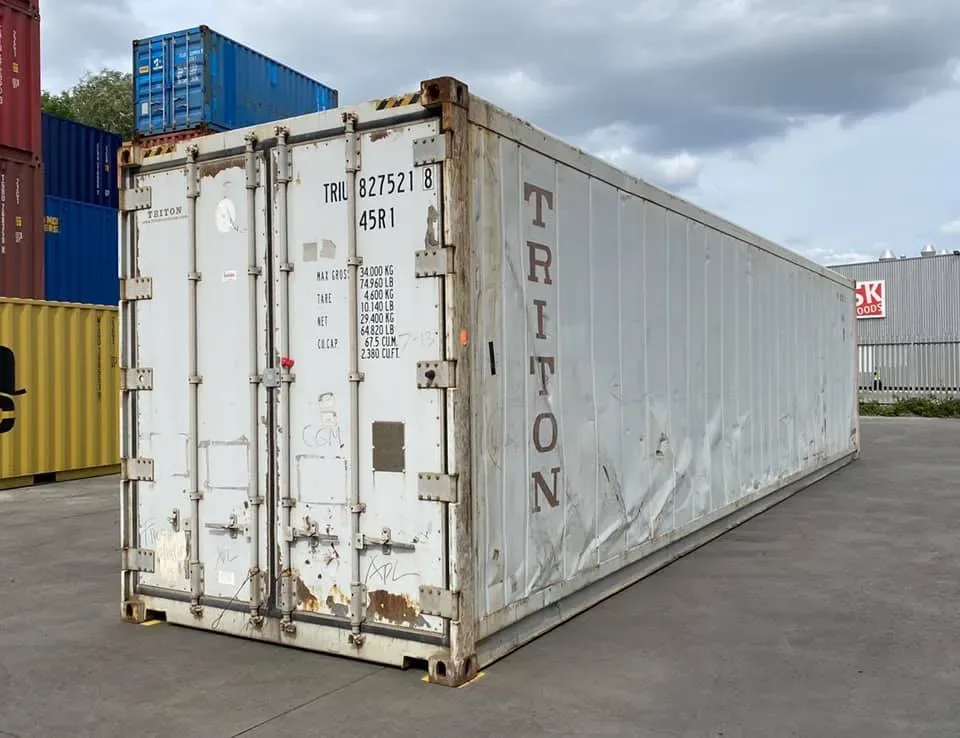 40ft Used Shipping Container — tap to view
What actually carries the load
The thick steel block welded into each corner of a container is called a corner casting. Those four castings and the end frames they sit in carry the weight of the box and everything inside it. The floor and the side walls do not carry it. They hang between.
Some numbers worth having before you decide how solid the base has to be. A 20 ft container weighs about 5,000 lb empty. A 40 ft is around 8,400 lb. Both are rated to 67,200 lb gross when loaded, which puts roughly 16,800 lb on each corner at full rating, and the load is rarely spread evenly end to end.
That is why a container never goes down on its floor with the corners in the air. Corners first, on something solid and level. On a 40 ft or 45 ft box on soft ground, support the middle of the bottom rails too, or the box sags in the centre and the doors stop closing.
The base options, and when each one is right
| Base | Works when | Watch for |
|---|---|---|
| Bare, compacted ground | A short-term drop on hard, drained ground, corners on blocks | Softens after rain, holds water against the steel, needs re-levelling within a season |
| Crushed stone pad | The default for storage containers | Needs compacting in passes, and an edge to keep the stone in place |
| Blocks or sleepers | Almost always, with stone, to lift the steel off wet ground | Blocks punch into soft soil; timber rots if it sits in water |
| Concrete slab or strip footings | Offices, cabins, workshops, anything with power and water | Costs the most, and the permit usually comes before the pour |
| Screw piles or helical anchors | Soft soil, a slope, or where wind uplift is the worry | Needs an installer with the right rig, and a plan |
The gravel pad, step by step
- Strip the topsoil, grass and any organic matter. Topsoil compacts to nothing and holds water.
- Cut the pad flat, about a foot beyond the container on all sides so you can work at the corners.
- Lay a woven geotextile over the subgrade. It stops the stone disappearing into soft clay.
- Bring in 4 in of crushed stone for storage, 6 in on clay, soft ground or a box that will be loaded heavy. 3/4 in minus, not clean gravel: the fines are what lock it up.
- Compact in two passes, not one thick dump.
- Check level with a laser or a straightedge on blocks, not by eye.
On volume: a 20 ft pad about 21 ft by 10 ft takes 2.5-4 cu yd of stone at 4-6 in. A 40 ft pad about 41 ft by 10 ft takes 5-7.5 cu yd. Order a little over.
Level is not the same as flat
A pad can be flat and still twist a container. What matters is that all four corners finish at the same height, front to back and side to side, within about a quarter inch of each other.
There is a free test. Walk up and swing both doors. They should move freely and latch without force. If a door binds, drops at its outer edge, or the two leaves no longer meet squarely, the box is racked. Lift the low corner and pack it. A twisted container also breaks the door seals, and that is where leaks start.
Leave the doors room to swing. Both leaves open past 90 degrees and want roughly the width of the container clear in front of them, which is also where you will stand with a pallet truck. If you plan two boxes end to end, leave walking room between the door end of one and the back of the next.
Water does the damage
- Set the pad slightly above the ground around it and let surface water run away from it, not under it.
- Do not site the box in a low spot, at the bottom of a slope, or where a gutter or downspout empties.
- Where water crosses the site, cut a shallow swale or a French drain uphill of the pad rather than hoping the stone copes.
- Keep soil, firewood and pallets off the sides. The bottom rail and the door seals rust first, and buried steel never dries.
- On clay, expect water to sit. Stone plus geotextile plus fall is the minimum there, not an upgrade.
Frost, clay and slopes
Where the ground freezes hard, it heaves. Blocks sitting on the surface get lifted and dropped unevenly through the winter, so a box that was level in October can be out by spring. Two honest answers: concrete piers taken below the frost line, or the expectation that you will re-level once the thaw is done.
Clay holds water and pumps under load, which is what stone and geotextile are for. On a slope steeper than about 3 percent, either cut a level bench into it or use piles. A box on a slope wants to slide, and one parked at the toe of a bank is taking the bank's weight as well as its own.
The truck needs ground too
The pad is only half the site work. The delivery truck has to reach it. For a tilt-bed drop, plan on about 75 ft of straight clear run for a 20 ft container and about 110 ft for a 40 ft, with 14 ft of overhead clearance.
The run has to be firm as well as clear. A tilt-bed and a loaded container put a lot of weight on the same soil your pad sits on. A soft lawn, fresh fill, or a pad that was tipped last week and never compacted will rut, and the trailer can bog down before it reaches the drop point. Put the stone in early, compact it, and let it settle before delivery day. If you are unsure, send us photos of the approach with your ZIP and we will tell you what we see.
Grade matters as much as surface. Grade the approach so the trailer can drop on level or nearly level ground, and keep the run clear of overhead lines, branches and fence posts. The published delivery detail is on the delivery page.
Permits, and the order of work
Check with your county or city before anything is compacted or poured. A storage container on private land is treated as a temporary structure in some places and needs a zoning or building permit in others. A container office or cabin with power, water or people working in it is a different conversation again: assume permits and a proper foundation, and plan for both. Keep the box clear of property lines and easements.
The order that saves money: ask about permits, grade and compact, bring in stone, then buy the container. Doing it the other way round means the unit sits on the truck's schedule, not yours.
What goes on the pad once it lands
The base is the cheap part. Decide now whether you want a ramp, steps, lighting, racking or a door stay, because fitting them with the box already placed is more work. Those parts are in container accessories, and if you are fitting the unit out for people rather than pallets, start from the office containers.
Browse the shipping containers we hold or read the short version in the buyer's guide.