Getting a container onto a New York site
New York is not one delivery problem. A lot in Buffalo, a driveway in Suffolk County and a street placement in Brooklyn fail in completely different ways, and the paperwork is different in each.
New York City
There is almost no off-street room in Manhattan, so most office units there go on the street or across a sidewalk — and that is a permit job. New York City publishes a construction activity permit for placing a container on the street, listed as permit 0214 at $50 for 90 days, and a separate one for placing a shanty or trailer on the street (0205, same fee and term). Two things catch buyers out:
- The permit has to be held by a registered general contractor or a DOT-registered carting company, not by the property owner.
- DOT does not allow storage containers on city streets for non-construction storage at all. If the unit is really storage for a shop or a building, the street is the wrong answer and the driveway, yard or lot is the only one.
Brooklyn, Queens, the Bronx and Staten Island are a different trade again: plenty of sites have a rear yard, a fenced lot or a driveway wide enough to drop a unit inside the property line, and then you are dealing with Buildings, not DOT street permits. Any occupied office — as opposed to a sealed box in a yard — is the piece that usually needs a filing.
Long Island
Nassau and Suffolk are town and village territory: Hempstead, Oyster Bay, Islip and Brookhaven each run their own code, and a village inside a town has its own again. Expect to say where the unit sits, how it is blocked and anchored, and what it is used for. Access is the other half: mature trees, tight residential side streets and a driveway that has to be walked before we can promise a 20 ft will land where you want it.
Upstate
Westchester, Rockland, Orange and Dutchess, the Capital Region, and the Buffalo, Rochester and Syracuse corridors are town-level permitting with far more room on the ground — farms, contractor yards, industrial parcels. The winter is the real constraint up here: a plowed bank at the gate and ground that is soft under the frost turn a straightforward drop into a rescheduled one, so pick the pad and clear the run before the truck is booked.
The tilt-bed run, the crane, and 14 ft of air
Most units come off a tilt-bed: the truck backs in, tips the deck and the container slides off. That needs a straight clear run behind the truck — about 75 ft for a 20 ft unit, about 110 ft for a 40 ft — plus 14 ft of overhead clearance for the boom and for limbs, on firm dry ground, because the truck itself is heavy.
Now the New York part. Commercial vehicles, trucks and tractor-trailers are not permitted on New York State's parkways at all, and the bridges over them run as low as 6 ft 11 in. Your driver is coming in on I-95, I-495, I-87 or I-278 and staying on the truck routes, which means the last mile into a site can be longer and tighter than the map suggests. A 14 ft clearance is not a comfortable margin on a parkway approach — it is the reason the run gets planned off the parkway.
If the site has no run at all — a mid-block lot, a rear yard behind a building, a Manhattan placement — the unit comes off with a crane instead. Say so when you order: it changes the truck, the day and the quote.
Which office container suits the job
Three sizes do most of the work in this state:
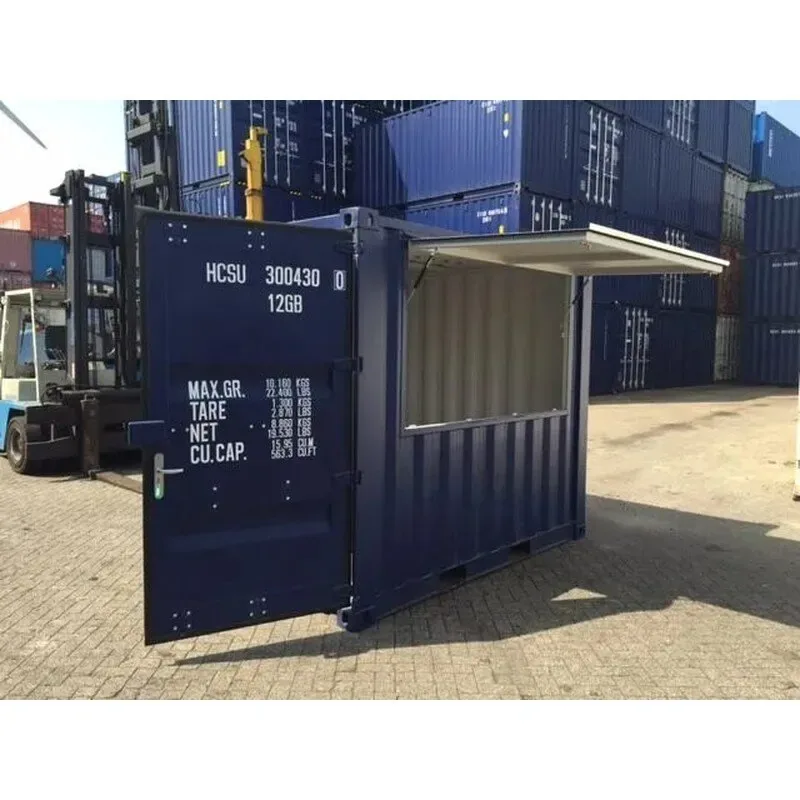
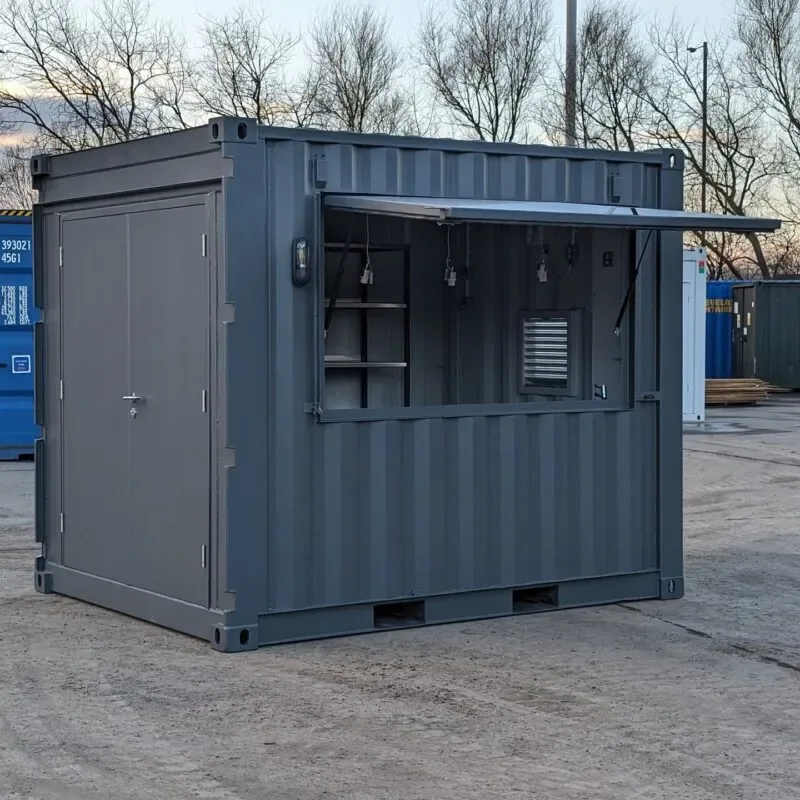
- 10 ft — a gatehouse, ticket window, security post or a supervisor's box on a tight lot. Short enough to fit where a 20 ft will not.
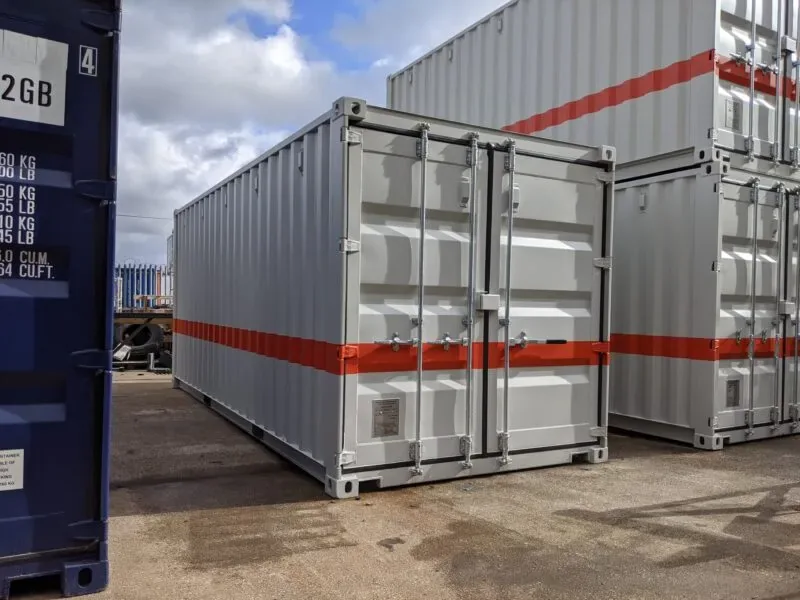
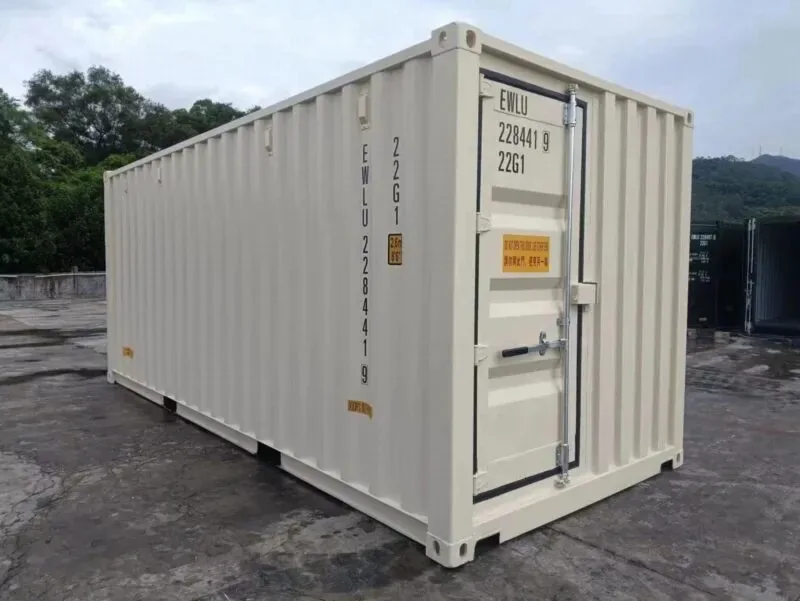
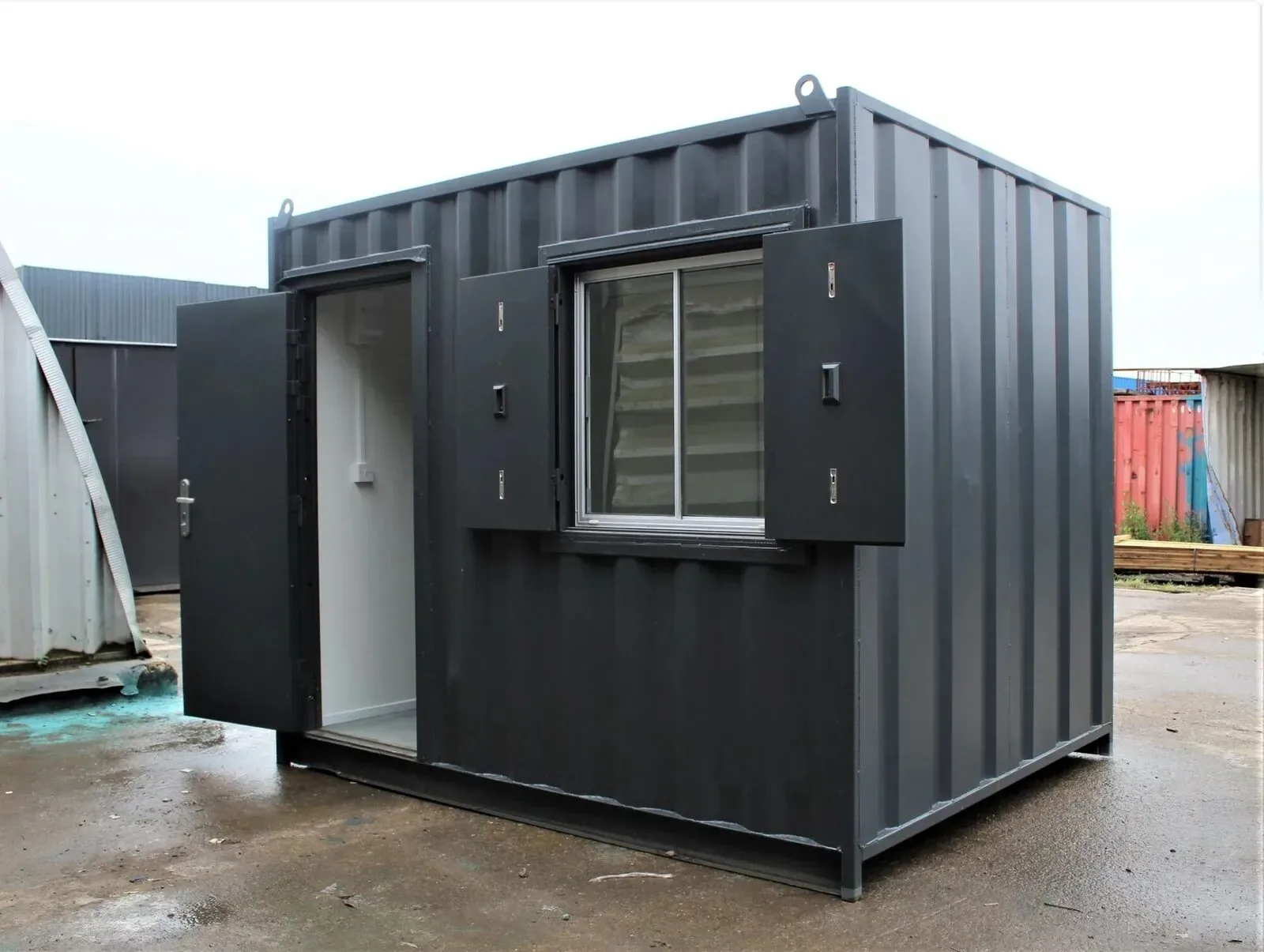
- 20 ft — the standard site office. An open-plan layout takes a desk cluster, a plan table and a coffee counter, and 20 ft is the size that fits a residential driveway on Long Island.
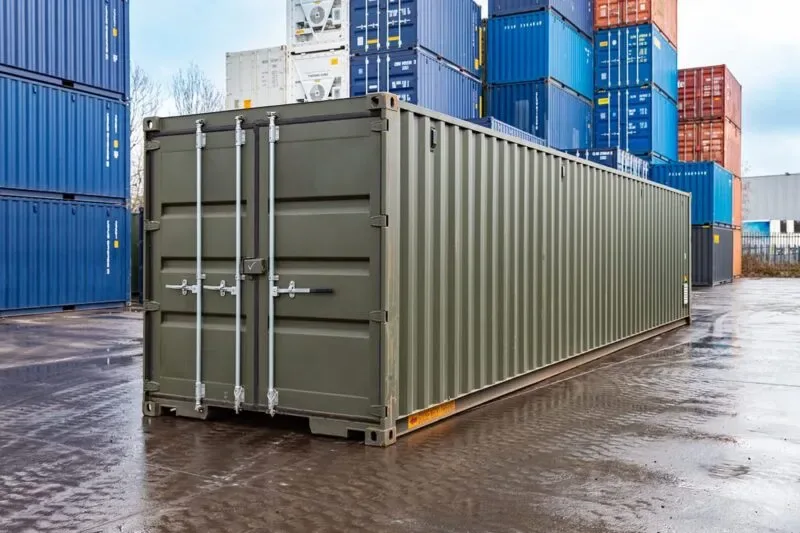
- 40 ft — a longer job with more crew, or an office with an ADA restroom built in. It needs the 110 ft run and a serious gate.
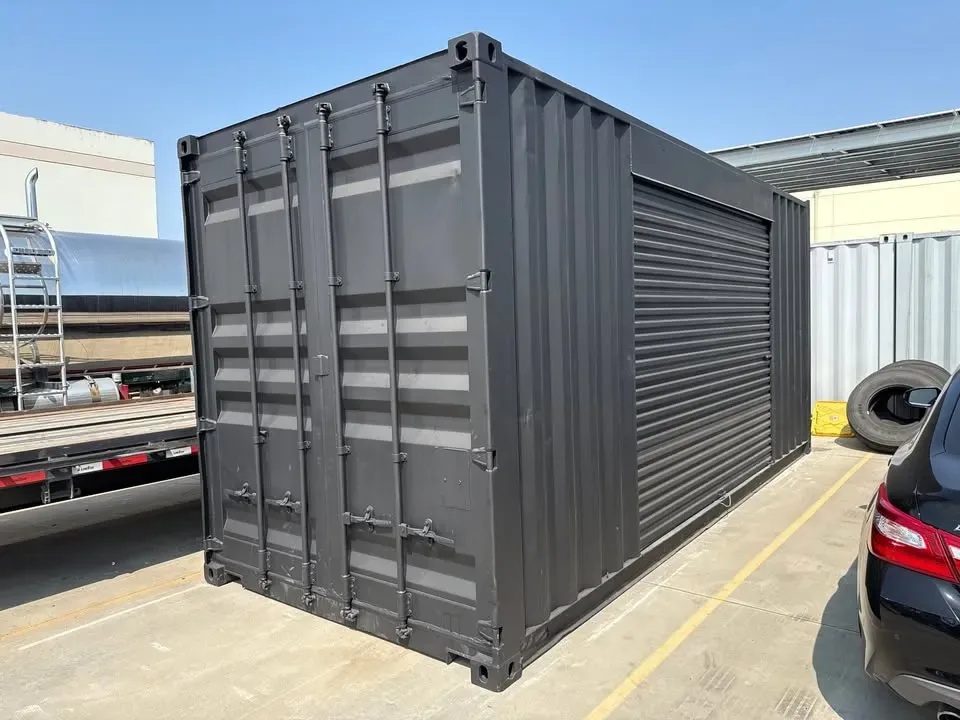
Heat is not optional in a New York winter and air conditioning is not optional in a Brooklyn August, so look at the units with insulation, 120V wiring and a mini-split already fitted rather than planning to add them later. Browse the whole range on the modified and office containers page, or start from the Offices & Cabins department.
Freight from Concord to New York
About 645 miles, roughly 10 to 11 hours of driving by car — the truck takes longer and runs on its own schedule. New York is in the published 4-10 business day transit window after dispatch, and dispatch runs 2-5 business days after payment clears.
The delivered number is quoted to your ZIP, not to the state. A yard in Cheektowaga, a driveway in Massapequa and a street placement in Queens do not price the same, and nobody can give you a real figure without the ZIP and the site address. It is shown in writing on the invoice before anything is paid, nothing is charged on the website, and orders can be cancelled at no cost before dispatch. Read the delivery policy for the full picture.
If you would rather collect it, pick-up at the lot in Concord is free and units can be inspected there by appointment — but that is a 645 mile tow behind you, so most New York buyers take delivery.