Start with the tallest horse, not the head count
Size the trailer around the horse that needs the most room, then add the others. Measure from level ground to the top of the withers, the bony ridge where the neck meets the back, with the horse standing square. That number goes against the inside height on the listing, not the outside height.
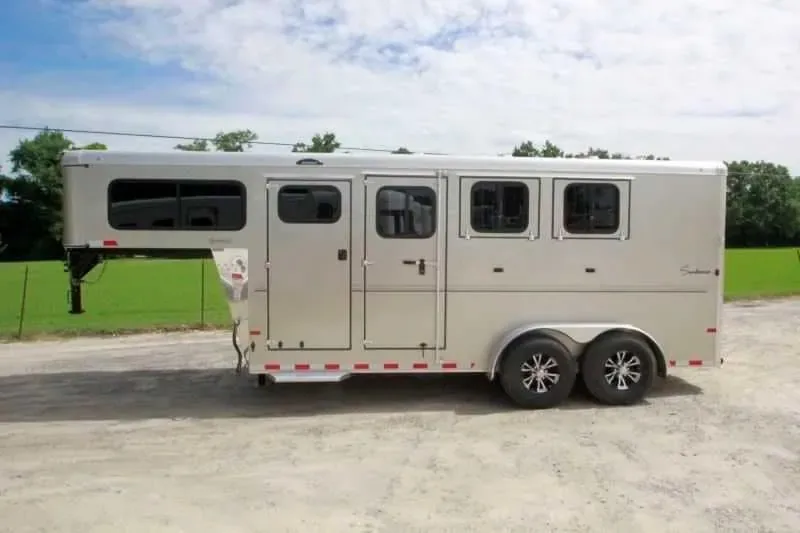
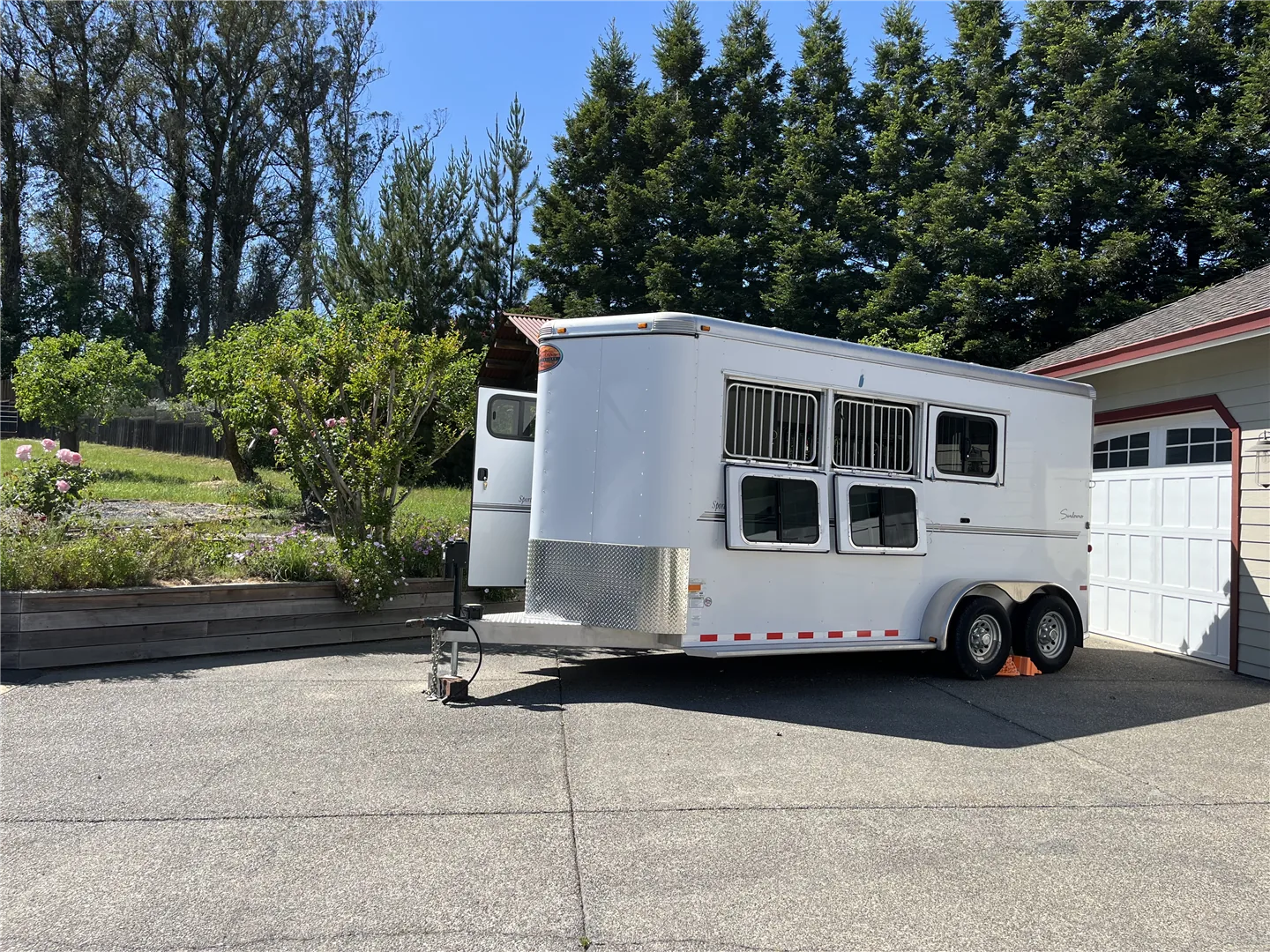
Inside height is where used trailers separate. The 2017 CM 3HSLBP three-horse bumper pull lists 7 ft inside. The 2018 Lakota 84HBPSL four-horse lists 7 ft 6 in. The 2019 Sundowner Charter two-horse lists 7 ft inside on a 6 ft body, and the listing calls it warmblood-size for that reason: a big horse wants the height and the width together.
A horse that has to duck, or rides with its head jammed against the roof, fights the trailer the whole way. Watch the horse load and stand in the stall before you trust a tape measure.
Height gets you in the door; load type decides the stall
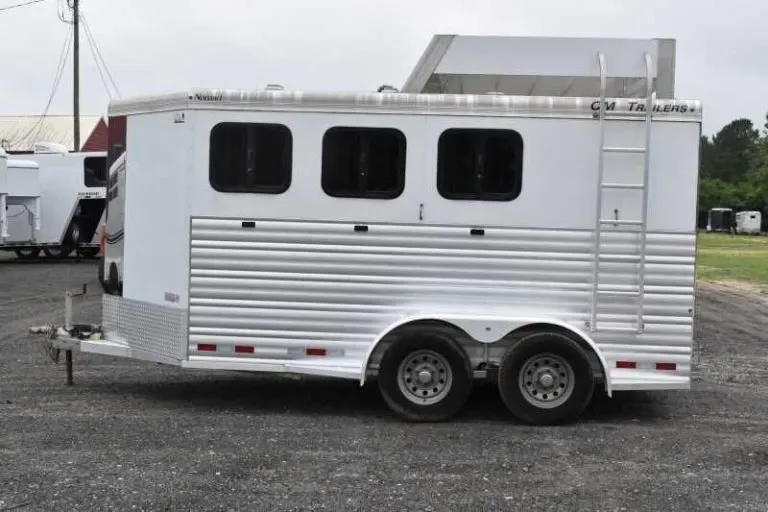
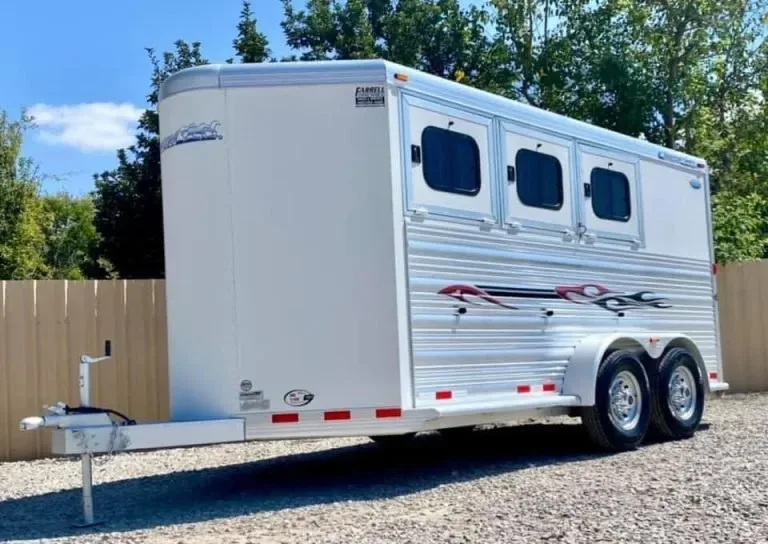
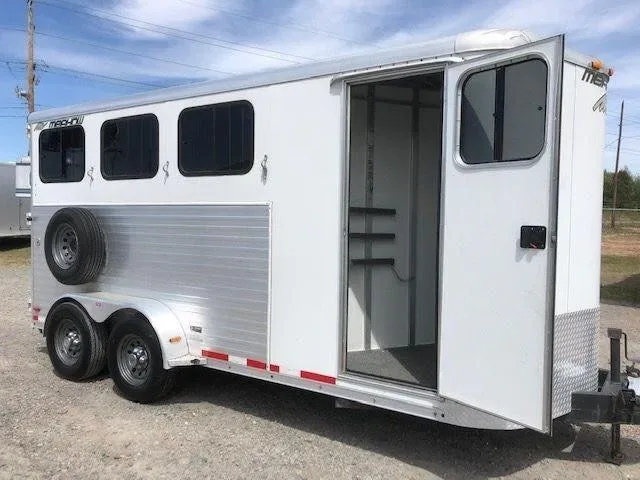
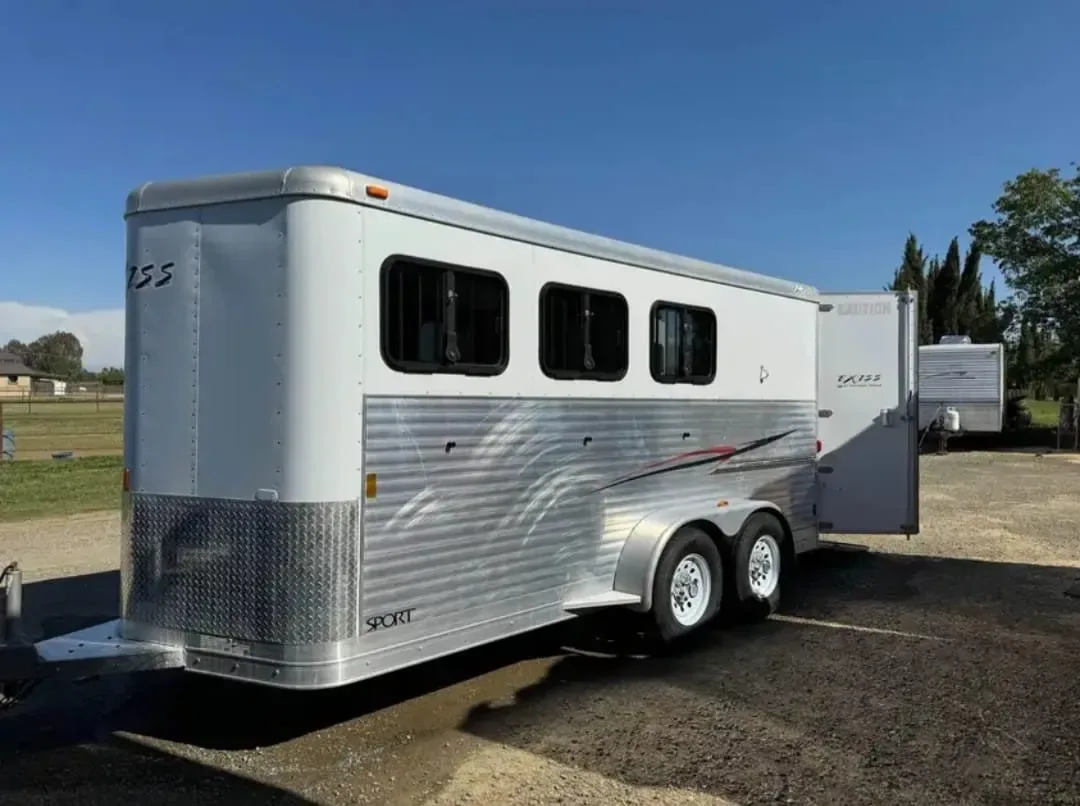
Slant load stands the horses at an angle. You fit more of them into a shorter box, which is how the CM three-horse lists a 17 ft box. The trade is a shorter diagonal for a long-bodied horse, and horses load one at a time from the side.
Straight load faces every horse forward. Each one gets nose-to-tail room and you unload in sequence, but a straight load runs longer for the same number of horses, and a front dressing room adds to that length.
Width counts as much as length once a horse is in there. An 8 ft outside width, the Lakota four-horse, gives each stall more to stand in than the 6 ft body of the CM three-horse.
Two, three or four: the axles and the GVWR are the real jump
Adding a stall changes the weight more than the length.
- Two horses. The 2019 Sundowner Charter lists a 16 ft floor and a 7,000 lb GVWR.
- Three horses. The 2017 CM 3HSLBP lists 3,500 lb empty on a 3,500 lb axle setup, with a 7,000 lb GVWR.
- Four horses. The 2018 Lakota 84HBPSL lists 5,095 lb empty, 7,000 lb axles on 16-inch tires, and a 12,500 lb GVWR.
Subtract empty weight from GVWR and you have what is left for horses, tack, hay and water: about 3,500 lb on the CM, about 7,400 lb on the Lakota. Weigh your horses on a livestock scale or with a weight tape, then add the gear. Guessing is how people end up overloaded on a trailer that looked fine empty.
Tack and dressing room space come out of the same box
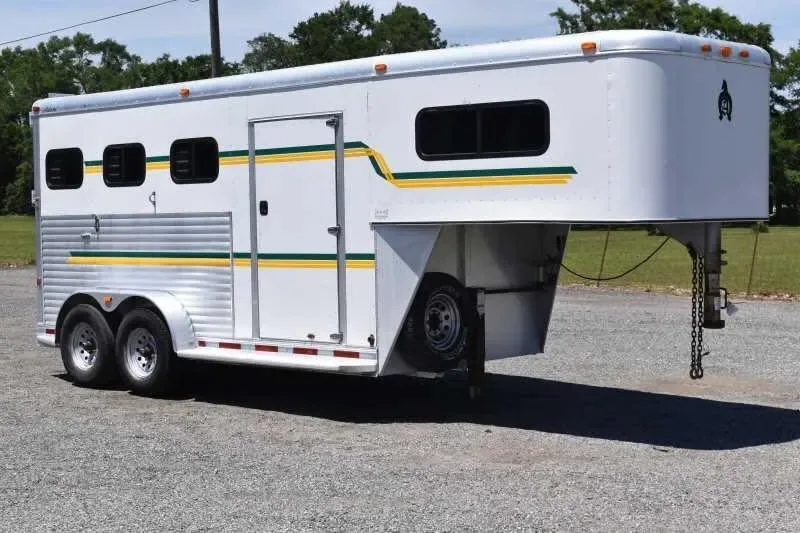
Dressing room depth shows on a listing as the short wall, the flat front section. Ours run from 2 ft to 4 ft 6 in. The 2000 Featherlite three-horse gooseneck lists a 4 ft dressing room with a clothes rod. The 2016 Hart Ultimate four-horse bumper pull lists a 4 ft 6 in carpeted dressing room braced for A/C, with a removable saddle rack and a 6 ft Hay Pod on the roof.
A weekender is a different animal. The 2004 Sundowner three-horse lists a 7 ft short wall with shower, toilet, sink and refrigerator, and 21 ft of floor length. That living space is why a three-horse trailer measures 21 ft.
Tack can also ride behind the last stall, or between the stalls and the living quarters. The 2022 Sundowner three-horse has a fold-up rear tack with a three-tier saddle rack. The 2004 Hart three-horse has a mid-tack. Ask which one a trailer has before you assume the horses get the whole box.
Do the truck arithmetic before you like the trailer
Two numbers on your truck decide it: the towing capacity for your exact cab, bed, axle ratio and drivetrain, and the payload on the door sticker. Compare trailer GVWR, the loaded weight, to the first. Everything in the truck, including people, fuel, the hitch and the dog, comes out of the second.
A four-horse at 12,500 lb GVWR asks for a three-quarter-ton or one-ton rig. A 7,000 lb two- or three-horse is a different conversation. A gooseneck puts the weight over the rear axle and tows steadier, but it needs a bed-mounted hitch, and the trailer still has to sit inside the truck's rating. A bumper pull uses the receiver you already have.
Bring the truck to the lot and read the sticker on the driver's door jamb. Contact us with a photo of that sticker and the unit you are looking at, and we will tell you what we would check before you hitch up.
The order we size it in
- Height and length of the tallest horse: sets inside height and load type.
- How many you actually haul: sets axles and GVWR.
- Tack, hay and gear: sets dressing room, mid-tack or rear tack.
- Truck towing rating and payload: decides whether the trailer is yours to tow.
- Where it parks and turns: sets length and hitch type.
Every unit on the lot is photographed and priced in dollars, and you can inspect any of them by appointment at 1122 Matchstick Pl SW, Concord, NC. Bumper pull or gooseneck, two stalls or four, start with the horse trailers in stock, then look at the two-horse, three-horse and four-horse listings. Delivery is quoted to your ZIP, and the delivery page covers how a trailer reaches you. The buyer's guide has the rest of the trade-offs.